
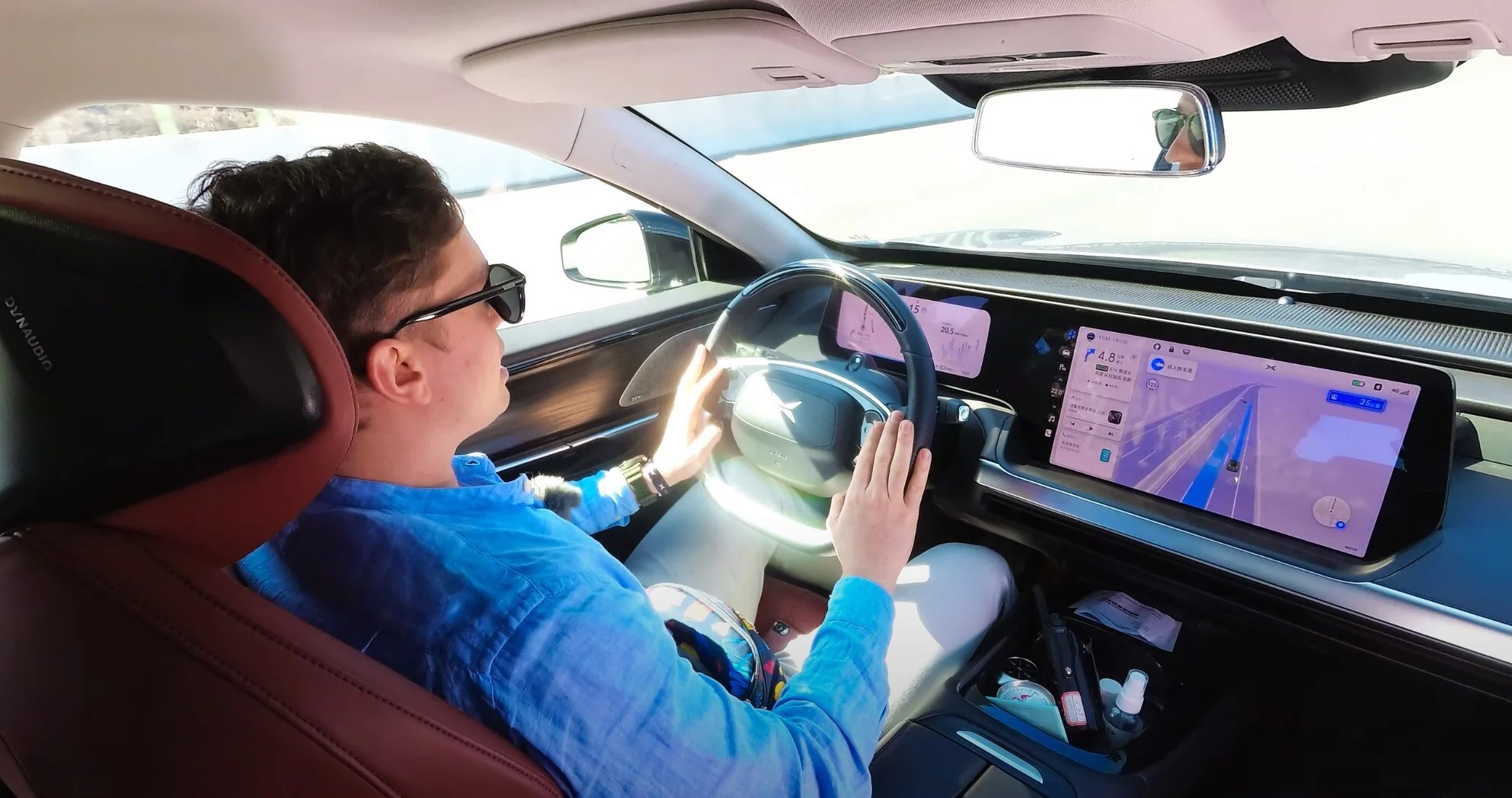
On the road with Highway Navigation Guided Pilot, the semi-autonomous driving tech from XPeng
XPeng Inc. released their Highway Navigation Guided Pilot (NGP) software to customers via an over-the-air (OTA) update on January 26, and has already logged over one million kilometers within its first 25 days.
XPeng Inc. releases autonomous technology
XPeng Inc. released their Highway Navigation Guided Pilot (NGP) software to customers via an over-the-air (OTA) update on January 26, and has already logged over one million kilometres within its first 25 days.
Youtuber Wheelsboy visited XPeng’s headquarters, and demonstrated the company’s NGP technology on an electric P7 sedan:
XPeng’s NGP features
Owners are required to watch an instructional video and complete a quiz before the software features are unlocked. Once operational, XPeng’s NGP can perform the following functions:
Automatic lane changing and overtaking with lane optimisation
Automatic speed limit adjustment
Automatic changing of highways
Automatic highway ramp entering and exiting
Collision avoidance, in -lane and while changing lanes
Identification and avoidance of obstacles on the road

Customers are required to watch a safety video regarding the operation of NGP before using the features. Image: XPeng
XPeng is working hard to gather data from customers on the road to improve their technology. NGP utilises cameras, sensors, radar and lidar for its suite of autonomous functions, whereas Tesla has avoided lidar technology, with Elon Musk going so far as to say “lidar is a fool’s errand” and “Anyone relying on lidar is doomed. Doomed!”
We know that Tesla’s autonomous systems are a technological tour-de-force, with dual chips for redundancy, and a processor capable of over 144 trillion operations per second (TOPS). For comparison, XPeng’s in-car computer is currently rated at 30 TOPS, but the company promises increases to the computing power over time. We’re yet to see how well XPeng’s NGP software works outside of China, but Wheelsboy’s video demonstrates promising signs of competent driver assistance technology.
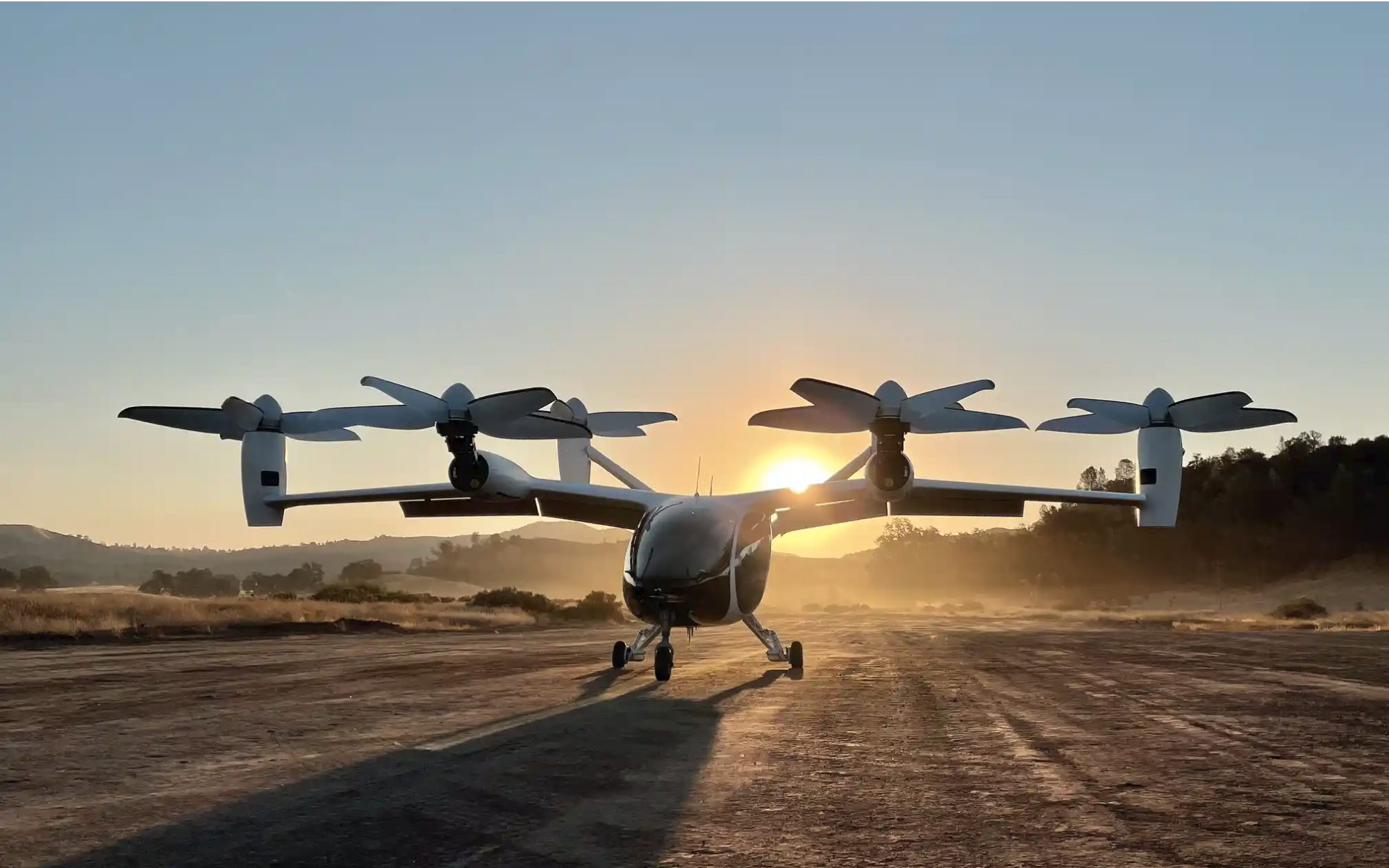
First Look: Joby Aviation's electric VTOL taxi takes flight
Joby Aviation’s as-yet-unnamed aircraft is likely to be the world’s first certified and operational electric airborne taxi thanks to some serious financial backing, and manufacturing support from Toyota.

Joby Aviation positions itself as premier air taxi start-up after successful flight trials and solid backing
Air taxis were all the rage in 2020, with Uber Elevate promising an operational air taxi trial in 2020. Even the Australian media lapped it up, but, quelle surprise, the concept died a quiet death. Clearly, Uber realised that the company’s focus should likely focus on profitability from its ride-share app.
Enter Joby Aviation, based in Santa Cruz, California. Founder and CEO JoBen Bevirt likes to fly under the radar, but is known for selling his previous company Velocity11, which is a leader in liquid-handling robots and lab automation.
Joby Aviation is likely on the cusp of purchasing Uber Elevate according to Axios, and their as-yet-unnamed aircraft is set to be the world’s first certified and operational electric airborne taxi thanks to some serious financial backing, and manufacturing support from Toyota.

Joby Aviation’s eVTOL taxi. Images: Joby Aviation
Joby Aviation has agreed on certification terms with the Federal Aviation Administration (FAA), and has received close to US$1 billion in funding from Toyota, Laurene Powell Jobs’ Emerson Collective and Capricorn Investment Group.
Joby has released the below videos to increase investor hype as it prepares to go public on the New York Stock Exchange with Special Purpose Acquisition Company (SPAC) Reinvent Technology Partners. The combined company will have a pro forma implied valuation of US$6.6 billion.

Six rotors and a 240 kilometre range.
The silent aircraft features five-seats, and can reach 322 km/h (200 mph) and travel 240 kilometres (150 miles using current battery technology) With six large tilting rotors to achieve vertical lift and horizontal winged cruise, its design has won praise from many aviation experts, and could genuinely revolutionise the way many people commute and travel. The reliability and simplicity of battery electric systems and electric motors will mean that manufacturing and maintenance costs will be low, and the silent flight would allow the Joby aircraft to operate in airspace helicopters can only dream about.
Bevirt hopes that rides will eventually cost the same as an Uber X, around US$2.50 per mile. Morgan Stanley estimates the air-transport category could generate $674 billion a year in fares worldwide by 2040, and Joby is planning to be ready, with construction beginning on a 450,000-square-foot manufacturing facility, designed in conjunction with Toyota, later in 2021.

Hyundai's IONIQ 5 electric SUV revealed; two battery sizes, V2L and 350 kW charging
The 2022 Hyundai IONIQ 5 has been revealed to the world via an online livestream, and it looks sharp. Quite literally, because Hyundai's new 'Parametric Pixel' design language is all about creases and angles. Set to compete against the just-released Volkswagen ID.4, upcoming Volvo XC40 P8 AWD Recharge, and potentially Tesla's Model Y, the IONIQ 5 combines Hyundai’s electric vehicle know-how, with a rethink about how a vehicle can be used.

Hyundai rethinks the electric SUV with fresh faced IONIQ 5
Four available variants; Long Range 72.6 kWh battery with rear-wheel-drive or all-wheel-drive, Standard Range 58 kWh battery with rear-wheel-drive or all-wheel-drive
Maximum claimed range (WLTP) of 470-480 kilometres (292-298 miles) for Long Range rear-wheel-drive variant
Long Range AWD variant develops 225 kW/605 Nm (305 PS/446 ft-lb); 0-100km/h (0-62mph) in 5.2 seconds
400-800V system architecture allows for 220kW charging; claimed 100 km of range (WLTP) added in 5 minutes of charge
Vehicle-To-Load output with 3.6kW to power personal devices
IONIQ 5 Project 45 launch edition available to preorder in Europe now from GBP£45,000, €59,550 in Germany (AUD$91,534)
The IONIQ 5 rides on the new E-GMP platform. Images: Hyundai Worldwide
The 2022 Hyundai IONIQ 5 has been revealed to the world via an online livestream, and it looks sharp. Quite literally, because Hyundai's new 'Parametric Pixel' design language is all about creases and angles.
Set to compete against the just-released Volkswagen ID.4, upcoming Volvo XC40 P8 AWD Recharge, and potentially Tesla's Model Y, the IONIQ 5 combines Hyundai’s electric vehicle know-how, with a rethink about how a vehicle can be used.
IONIQ 5 Drivetrain and Battery
Hyundai essentially offers four variants of the IONIQ 5:
Long Range - 72.6 kWh battery
AWD dual-motor version with 225kW (305 PS), 605Nm (446 ft-lb), 0-100 km/h (0-62 mph) in 5.2 seconds
RWD single-motor version with 160kW (217 PS), 350Nm (258 ft-lb), 0-100 km/h (0-62 mph) in 7.4 seconds
Standard Range - 58 kWh battery
AWD dual-motor version with 173kW (235 PS), 605Nm (446 ft-lb), 0-100 km/h (0-62 mph) in 6.1 seconds
RWD single-motor version with 125kW (170 PS), 350Nm (258 ft-lb), 0-100 km/h (0-62 mph) in 8.5 seconds
Fast charing up to 220 kW is available
Based upon Hyundai’s new Electric Global Modular Platform (E-GMP), the IONIQ 5 aims to rethink how electric vehicles are used, and change preconceptions about charging. Hyundai has only quoted the WLTP rated range for the RWD Long Range variant so far, at 470-480km (292-298 miles). Based on the impressive efficiency of the Kona Electric, we’d say that it may be possible to get close to that, with some careful driving.
The new E-GMP platform is lauded by the company for it’s modular, efficient design as well as its 400/880-V charging infrastructures as standard. With a maximum charge rate of 220kW, Hyundai claims the IONIQ 5 can charge from 10 percent to 80 percent in just 18 minutes.
Hyundai is also promoting the IONIQ 5’s Vehicle-To-Load (V2L) function, which allows customers to freely use or charge any electric devices, such as electric bicycles, scooters, computers or camping equipment via 3.6 kW outlets. V2L ports are located under the second-row seats and at the charging port on the vehicle exterior.
IONIQ 5 Exterior Design
The design of the IONIQ 5 is captivating, and has seemingly won universal praise from the majority of the media and customer base. What could be considered a fussy design feels restrained, partly because the creases and angles project the impression of a taut skin stretched over the vehicle frame.
The Parametric Pixel design language is delightfully retro yet modern simultaneously; the squared-off, chiseled front end reminds us of Alfa’s famous SZ coupe, but the LED lights and active aero flaps are definitely 21st century.
The IONIQ 5 features razor sharp lines.
A retro yet futuristic appearance.
The sharp ‘Z’ crease through the side somehow works, and is nicely integrated into the rear highlight lines. In fact, the squared-off rear reminds us of another Italian - the Lancia Delta HF Integrale. With a three metre wheelbase and an overall length of 4.64 metres, this is not a small car, yet its heft is disguised and it looks more like a Euro sports hatch than a Korean SUV. At 1.6 metres tall, it’s actually higher than the Polestar 2, however it looks less ungainly.
IONIQ 5 Interior Features
It’s on the inside of the IONIQ 5 where the E-GMP platform really shines. That three metre wheelbase? Well it’s 100mm longer than Hyundai’s giant Palisade wheelbase for starters, and with the flat interior floor, Hyundai’s designers are dubbing this a ‘living space’.
Dual screens and a modular interior.
Plenty of space thanks to the E-GMP platform’s 3 metre wheelbase.
There’s a universal middle island to allow passengers to enter from either side, eco-friendly yarns and plastics, a large glass roof (with optional solar panels), and wireless chargers and USB ports all round. The front seats recline to almost flat for even greater comfort, while rear headroom and legroom looks to be far beyond that expected from the compact SUV class.
The rear boot holds 531 litres, and unlike the Kona Electric, Hyundai has been able to squeeze in a front boot with a 57 litre capacity.
IONIQ 5 Vehicle Technology
Naturally, the IONIQ 5 will be well connected and tech-laden. Sporting twin 12-inch screens as well as an Augmented Reality Head-Up Display (AR HUD), The IONIQ 5 can project navigation and other information ahead of the driver. Cloud-based Connected Routing ensures accurate navigation including live traffic forecasting, accurate re-calculation of routes and the availability of charging stations.
A spacious rear compartment, and 3.6 kW available to power devices.
We don’t know what’s going on here, but be sure to tick the scrapbooking option on Hyundai’s new IONIQ 5.
Hyundai’s Dynamic Voice Recognition system accepts simple voice commands to conveniently control cabin A/C, radio, tailgate hatch opening/closing, and can also assist with various points of interest (POI) and weather status updates.
Naturally, there’s a smartphone app that allows for remote starting of the vehicle, scheduling charging times and pre-heating the cabin.
There’s a full suite of active and passive safety systems, from a 360 degree surround view camera, to Driver Attention Warning (DAW) which displays the driver’s attention level and provides a warning when signs of driver inattentiveness are detected. Hyundai’s Highway Driving Assist 2 (HDA 2) makes highway driving more convenient by utilising the front view camera, radar sensors and navigation data to control the vehicle’s speed and following distance, while keeping the vehicle centred in its lane.
The IONIQ 5 is open for pre-orders in Europe now, with deliveries expected in summer 2021. The IONIQ 5 is expected to launch in Australia in the third quarter of 2021. According to the press release, Hyundai will further expand its BEV lineup with IONIQ 6, an electric sedan, and the IONIQ 7 large electric SUV.
We’ve already expressed our excitement about getting our hands on the IONIQ 5; the vehicle topped our list for the most anticipated electric vehicles this year. Hyundai appears to have knocked it out of the park when it comes to the exterior and interior design, and if it builds on the Kona Electric’s efficiency, refinement and practicality, it should be a big seller for Hyundai. The only sticking point may be price; at £45,000 in the UK and €59,550 in Germany for the Project 45 launch edition, that equates to around AUD$91,534. While this is obviously for the top-spec variant, we’d like to see the base IONIQ 5 start closer to €30,000 in Europe or around $45,000 in Australia to be truly game changing.

Hyundai Ioniq 5 debuts today: Watch the livestream world premiere here!
The IONIQ 5 world premiere livestream will start on 23/2/21 at 6:00PM AEST, 8:00AM CEST and on 22/2/21 at 11:00PM PT
We’ve covered Hyunidai’s IONIQ 5 rather frequently, as this new electric vehicle based on the E-GMP platform is set to be an important vehicle for the South Korean automaker.
The IONIQ 5 world premiere livestream will start on 23/2/21 at 6:00PM AEST, 8:00AM CEST and on 22/2/21 at 11:00PM PT
We’ve covered Hyunidai’s IONIQ 5 rather frequently, as this new electric vehicle based on the E-GMP platform is set to be an important vehicle for the South Korean automaker.
The IONIQ 5 is expected to feature a 450 kilometre (280 mile) WLTP rated range from a 58kW hour battery, with an option for a 73kWh battery with a 550 kilometre (340 mile) range. With two motors, the all-wheel drive setup should scoot the IONIQ 5 to 100km/h (62mph) in 5.2 seconds courtesy of 230kW (313 PS) between the wheels.
Twitter has already allegedly sprung the final exterior design on the IONIQ 5, with users @macheauto and @seb68 sharing what look to be a number of press images in the below thread:
Final prototypes have been spotted out gathering data in Australian cities over the last couple of months, and it’s expected that Australia will be an important market for Hyundai’s new IONIQ brand, as well as for its new Kona Electric which is set to launch in March 2021.
Hyundai is promising ideal weight distribution, a modular flexible interior and V2X functionality, with the ability to power computers, tools or camping equipment from build in power outlets.
We’re genuinely big fans of the IONIQ 5’s sharp design, and if the Kona Electric is anything to go by, Hyundai will continue to improve its EV offerings with the IONIQ 5 by increasing battery range, refinement, energy efficiency and luxury.

Volvo commits to electric vehicle rollout in Australia
Swedish car maker Volvo is unwavering in its commitment to electrification, and on the back of attaining the highest sustainability accreditation level from Ecovadis has committed to bringing its electric vehicle range to Australia, despite a political climate that is, shall we say hostile towards the decarbonisation of transport.

XC 40 Recharge Pure Electric to join Volvo’s Australian range in 2021
Swedish car maker Volvo is unwavering in its commitment to electrification, and on the back of attaining the highest sustainability accreditation level from Ecovadis the company has committed to bringing its electric vehicle range to Australia despite a political climate that is, shall we say, hostile towards the decarbonisation of transport.

The Volvo XC40 Recharge Pure Electric. Images: Volvo Cars
Volvo Cars Australia (VCA) managing director Stephen Connor said that every model Volvo releases from 2022 will either be pure electric or will have a pure-electric variant and the brand has a pledge to be completely electric by 2030. In an interview with Go Auto, he stated that he doesn’t want Volvo to be successful based on government subsidies; rather that “we forge our way by being a leader rather than waiting for things to happen.”
Connor went on to say “if Australia wanted to be seen as a true global player and one committed to environmental care then more has to be done.” “Just consider the three-point safety belt as an example. If we waited for all authorities and governments to agree on a way forward how many more lives could have been lost in the meantime.”

Volvo’s all-electric XC40
Volvo will be bringing its XC40 Recharge Pure Electric, based on Geely’s Compact Modular Architecture (CMA) to Australia within the next few months to complement the plug-in hybrid model already on sale. The EV variant packs a 72.5kWh battery, with a 400 kilometre WLTP-rated range. With 300kW (407 PS) and 660Nm (486 lb-ft) torque, its likely to be one of the quickest Volvos available in Australia.
Pricing has not been confirmed, but we would expect Tesla’s $70-80,000 Model 3 to be Volvo’s main price point target.

Battery assembly in Volvo’s Ghent plant.

Volvo’s electric compact modular architecture platform

Ultium Cells completes construction milestone at Ohio factory
Ultium Cells LLC, a joint venture between General Motors and LG Chem, aims to mass-produce Ultium battery cells at this new Ohio facility for General Motors’ next generation zero-emissions vehicles. GM and LG Chem are investing $2.3 billion in the facility to support EV manufacturing in the U.S., and in turn, local jobs, education, career training and infrastructure.

Ultium Cells factory under construction as GM nears 2022 launch date for next generation EV products
Ultium Cells LLC, a joint venture between General Motors and LG Chem, aims to mass-produce Ultium battery cells at a new Lordstown Ohio facility for General Motors’ next generation electric vehicles. General Motors and LG Chem are investing $2.3 billion in the facility to support EV manufacturing in the U.S., and in turn, local jobs, education, career training and infrastructure.
Working with LG Chem and General Motors, Ultium’s cells are of the large-format pouch design, and contain either vertically- or horizontally-stacked cells to integrate into GM’s upcoming modular EV platform – vertically for trucks, SUVs and crossovers, or horizontally for cars and performance vehicles.

Cadillac’s Lyriq is expected to debut GM’s new modular EV platform.
GM claims the batteries are able to be programmed digitally, as new chemistry is developed and becomes available, the battery management system could be upgraded digitally, similar to what Tesla already does with its over-the-air updates.
These high-capacity battery cells will also be switching to a Nickel Cobalt Manganese Aluminium chemistry, which reportedly uses 70% less cobalt than current technology.
The drive unit placement is also flexible, enabling front-, rear- and all-wheel drive variations. The motors were designed in-house at GM, and the modular platform is the first of its kind to support both front- and rear-wheel drive variants.
Ironworkers at Ultium Cells LLC’s battery cell manufacturing facility marked a construction milestone today with the final beam installation at what will soon be a 2.8-million-square-foot (260,000 square metre) operation in Lordstown, Ohio.
The team hoisted and installed the final beam as part of a traditional “topping out” ceremony, where leadership and trade partner employees had the opportunity to sign the beam and participate in a photograph.

Ultium Cells’ Ohio factory has topped out. Image: GM
Over 500,000 hours have been devoted to development of the facility, which is set to be completed in 2022. The framework of the building allows for an open floor plan, and the plant will equal the size of 30 football fields with an annual capacity of over 30 gigawatt hours of battery production, with room to expand.
“We are pleased construction at Ultium continues to progress safely and on schedule,” said Kee Eun, president of Ultium Cells LLC. “While we faced unprecedented challenges from the very beginning due to the COVID-19 pandemic, we have been able to execute successfully according to plan thanks to the collaborative efforts between General Motors and LG Chem, as well as the support and commitment from our contract partners and the local community.”
Ultium Cells is planning to create more than 1,100 new jobs in Northeast Ohio and is hiring to fill those positions currently.
Cadillac’s flagship Lyriq will likely be the first GM model to hit the market utilising Ultium Cells and GM’s new modular platform in the first quarter of 2022.

GM’s modular EV platform: Image: General Motors

Porsche readying its all electric Taycan Cross Turismo for launch
Porsche has released some further information on the upcoming Taycan Cross Turismo estate today, with the head of the Taycan model line, Stefan Weckbach, putting the pre-production car through its paces against a frozen European backdrop.

Porsche’s Taycan Cross Turismo is an electric soft-roader with style
Porsche has released some further information on the upcoming Taycan Cross Turismo estate today, with the head of the Taycan model line, Stefan Weckbach, putting the pre-production car through its paces against a frozen European backdrop.
It’s been three years since the striking Porsche Mission E Cross Turismo concept was launched, and the pre production Taycan Cross Turismo features in the below video, lightly camouflaged and retaining many of the design elements of the Mission E concept.

Porsche’s 2018 Mission E Corss Turismo concept. Image: Porsche
“With the Taycan Cross Turismo, we wanted to offer a little bit more space, a little more flexibility and versatility,” Weckbach says from behind the wheel. “We developed a completely new roofline, fitted with roof rails, a more generous second row and bigger trunk, all to make a car that is perfect for an active lifestyle. A car that is perfect for both an urban environment and the countryside.”
Weckbach didn’t divulge any specifications of the Taycan Cross Turismo, but expect similar Turbo S/Turbo/4S drivetrain options to the standard Taycan. It appears to have a longer wheelbase the the standard Taycan too, possibly creating additional interior and storage space. Naturally, as an elevated soft-roader, the Taycan Cross Turismo has light off roading capabilities. “In order to enable it to handle light off-roading and gravel roads,” Weckbach states, “we increased the ground clearance. And we optimised our suspension system so the Cross Turismo comes with a CUV (cross utility vehicle) specific driving mode. This makes sure it does well on gravel roads in terms of stability, performance, and dynamics.”
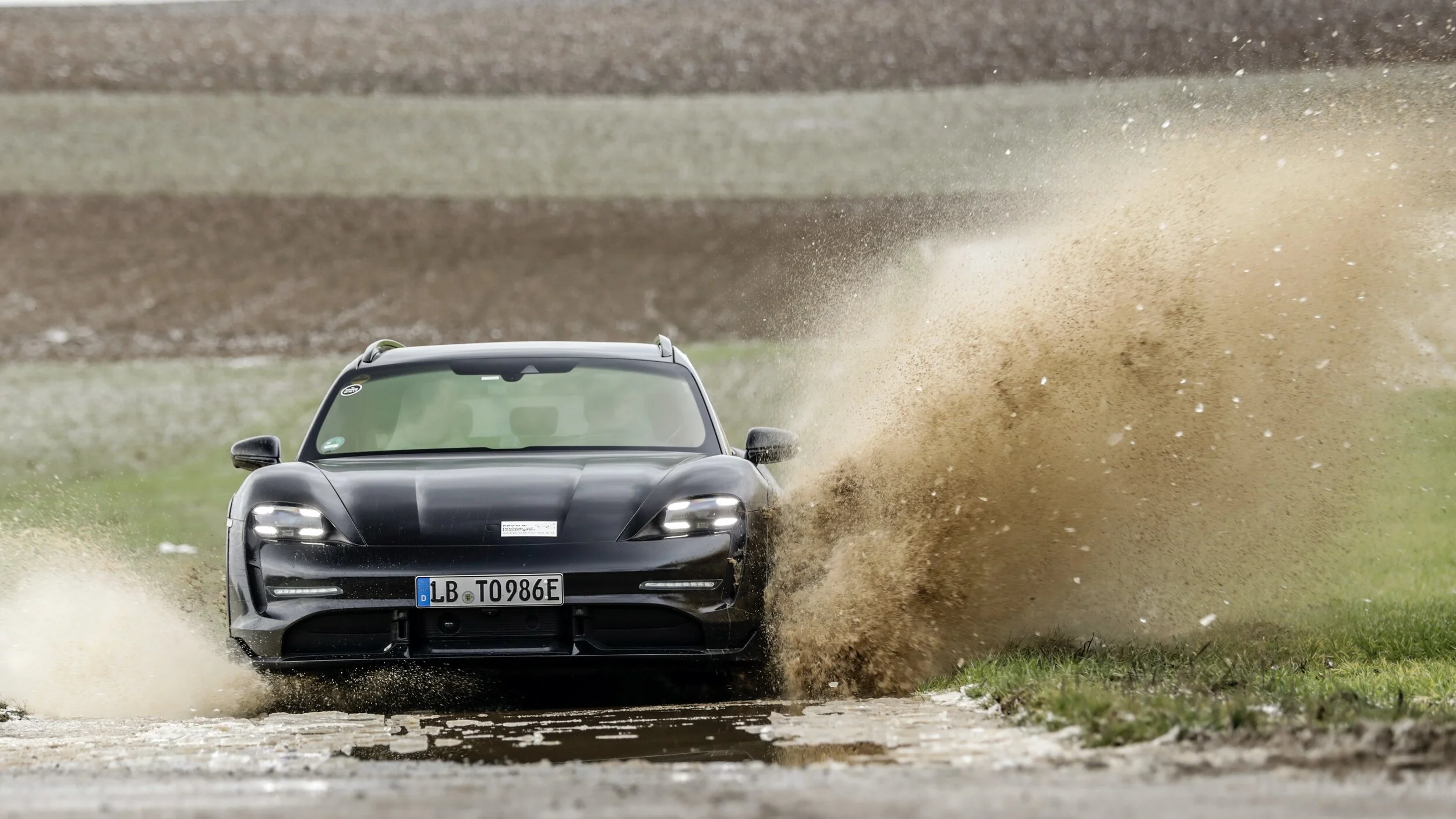
The Taycan Cross Turismo undergoing final pre-production testing.
The Taycan Cross Turismo is a big car on a big wheelbase. Image: Motor 1
The Porsche Taycan Cross Turismo prototype. Image: Motor 1
Porsche’s Taycan has been a success, with the company selling over 20,000 vehicles in 2020. Porsche obviously wants to capitalise on the Taycan platform, and it’s likely that we could see a non-elevated version—a Taycan Sport Turismo—sometime in the future too. As previous owners of German fast wagons, we’ve big fans of the fact that Porsche is continuing to launch fast wagons. With the global trend towards big heavy SUVS, let’s just hope that people actually buy the Taycan Cross Turismo. Porsche is expected to announce a launch date sometime in the second quarter of 2021.

Road tests begin of Amazon's new electric delivery vehicle built by Rivian
Amazon.com Inc. has received its first batch of Rivian Automotive electric delivery vans, and has put them to work on the streets of Los Angeles as part of a test phase for the vehicle. Amazon has released the below promotional video to mark the occasion, and they claim that there will be 10,000 Amazon custom delivery vehicles on the road as early as 2022.

Amazon and Rivian’s new van hits the road with 140 mile range and plans for 10,000 vehicles to be operational by 2022
Amazon.com Inc. has received its first batch of Rivian Automotive electric delivery vans, and has put them to work on the streets of Los Angeles as part of a test phase for the vehicle. Amazon has released the below promotional video to mark the occasion, and the company claims that there will be 10,000 zero-emissions Amazon delivery vehicles on the road as early as 2022.
Based on Rivian’s customisable skateboard platform, the vans can drive up to 150 miles (240 kilometres) on a single charge, making them perfect for last-mile delivery routes.
As a bespoke project for Amazon, it is understood that the two companies worked closely together to create a product with not only industry leading safety and design features, but with state of the art technology to assist a delivery driver’s workflow.
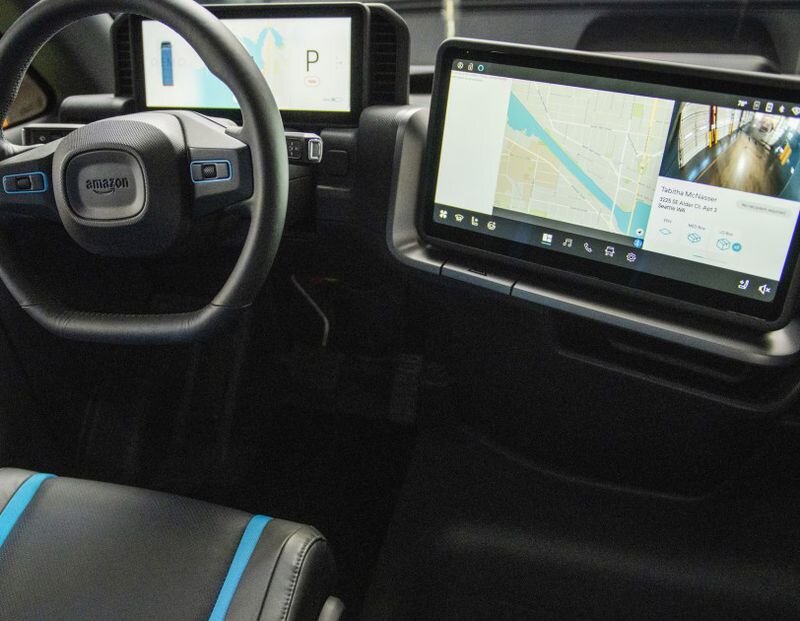
Amazon’s delivery van features 360 degree cameras and Alexa integration for the driver. Images: Amazon

Amazon’s custom made delivery van is based of Rivian’s modular skateboard architecture.
There are Three levels of shelving with a bulkhead door, which can easily be opened and closed for additional driver protection while on the road. The trucks feature Alexa integration for hands-free access to route information, and exterior cameras around the vehicle to give the driver a 360-degree view outside the vehicle.
Unfortunately Amazon has not revealed any details about the battery system, drivetrain or other specifications.
Speaking with CNBC, Ross Rachey, director of Amazon’s global fleet and products, stated that the company is proud of its electrification effort, with thousands of electric vehicle chargers in the pipeline for its North American and European facilities.

The rear of Amazon’s new delivery van will aid workflow for drivers
In support of The Climate Pledge, Amazon plans to be net-zero carbon by 2040 and also plans to power all operations with 100% renewable energy by 2025. The company eventually plans to have 100,000 fully-electric delivery vehicles on the road, with a target date of 2030 previously discussed. According to Bloomberg, Amazon has around 30,000 last-mile delivery vans currently in operation in the United States.

Ford Europe to produce electric cars exclusively by 2030
Ford Europe has confirmed a commitment to sustainable profitability overnight, beginning a US$1 billion transformation of its Cologne manufacturing site to modernise its vehicle assembly facility, and create a home for the company’s planned e-mobility business.

Ford Europe to go all electric by 2030 with new models and new e-mobility factory in cologne
Ford plans for 100% of its passenger vehicle range in Europe to be zero-emissions capable by mid-2026, moving to all-electric by 2030
$1 billion will be invested in a new electric vehicle manufacturing centre in Cologne
The company’s first European-built, volume all-electric passenger vehicle for European customers will roll off the lines in Cologne starting in 2023
Ford will utilise Volkswagen’s modular electric-drive toolkit (MEB) to underpin the new vehicles
Ford Europe has confirmed a commitment to sustainable profitability overnight, beginning a US$1 billion transformation of its Cologne manufacturing site to modernise its vehicle assembly facility, and create a home for the company’s planned e-mobility business.
Ford states that 100 percent of their passenger vehicle range in Europe will be zero-emissions capable, all-electric or plug-in hybrid by 2026, and that the range will be completely all-electric by 2030.

The Mustang Mach-E, Ford’s all electric sports crossover. Images: Ford Motor Company
Interestingly, Ford will rely heavily on Volkswagens MEB platform architecture, with the German automaker tweeting about the deal, and claiming Ford will be using 600,000 MEB platforms and associated components by 2028:
Ford returned a profitable fourth quarter of 2020 in Europe, despite losses across the business globally. Ford recently announced US$22 billion would be allocated for e-mobility investment through 2025, across all its R&D and manufacturing facilities.
Ford’s announcement comes immediately after Jaguar Land Rover committed to electrifying their fleets over the next decade, with General Motors, Volkswagen and Volvo making similar commitments last year.

Ford’s E-Transit and Mustang Mach-E

JLR has big plans for 2025 with six EV Land Rovers, all EV Jaguar range
Jaguar Land Rover is racing headlong into an all-electric future, with plans revealed to scrap all combustion engine Jaguar models from the line up by 2025. In addition, the company plans to launch six all-electric Land Rover/Range Rover models by the same year.

Jaguar land rover commits to all-electric future; fully electrified Jaguar Range by 2025 and progressive roll out of land rover BEVs
Jaguar Land Rover is racing headlong into an all-electric future, with plans revealed to scrap all combustion engine Jaguar models from the line up by 2025. In addition, the company plans to launch six all-electric Land Rover/Range Rover models by the same year.
Jaguar represents the epitome of British tradition, and has often been accused of struggling to evolve with the times. The company suffered from a COVID-19 related sales decline in 2020, delivering 23.9% fewer units than 2019 . This new global strategy, referred to as “Reimagine” by Jaguar is a firm response to the EU block’s stringent CO2 and greenhouse gas reduction targets over the coming decade.

Jaguar’s I-Pace has been a sales success for the company
Under the leadership of Chief Executive Officer Thierry Bolloré, the Tata Group-owned Land Rover and Jaguar brands will rely on two separate electric architectures with two clear, unique personalities. The first all-electric Land Rover will arrive in 2024, with diesel engines likely to be phased out completely by 2026. Jaguar’s Model line up will be completely electrified by 2025. Although it’s not yet known which models will comprise this line up, Jaguar has confirmed the nearly complete electric XJ has been scrapped.

Jaguar Land Rover CEO Thierry Bolloré.
Jaguar’s I-Pace has been a relative success for the company, selling 7,807 units worldwide in Q4 2020. The I-Pace’s unconventional styling likely hints at the future of Jaguar’s line up: heavily skewed towards profitable SUVs, with a sport-oriented aesthetic and smart packaging.
Land Rover will use the forthcoming flex Modular Longitudinal Architecture (MLA). It will deliver electrified internal combustion engines and full electric variants as the company evolves its product line-up in the future. In addition, Land Rover will also use pure electric biased Electric Modular Architecture (EMA) which will also support advanced hybrid vehicles.

Land Rover’s Defender PHEV will eventually be joined by an all electric variant
Jaguar Land Rover will retain its plant and assembly facilities in the home UK market and around the world. As well as being the manufacturer of the MLA architecture, Solihull, West Midlands will also be the home to the future advanced Jaguar pure electric platform.
Jaguar Land Rover is aiming to achieve net zero carbon emissions across its supply chain, products and operations by 2039. The company is also carrying out research in fuel-cell powertrains, as many global economies look toward hydrogen. Jaguar claims fuel cell powered prototypes will be on UK roads within the next 12 months. Jaguar Land Rover plans to spend circa £2.5bn annually in electrification technologies and the development of connected services and technology.

Jaguar currently offers one all electric I-Pace model, plus hybrid versions of the F-Pace and E-Pace.
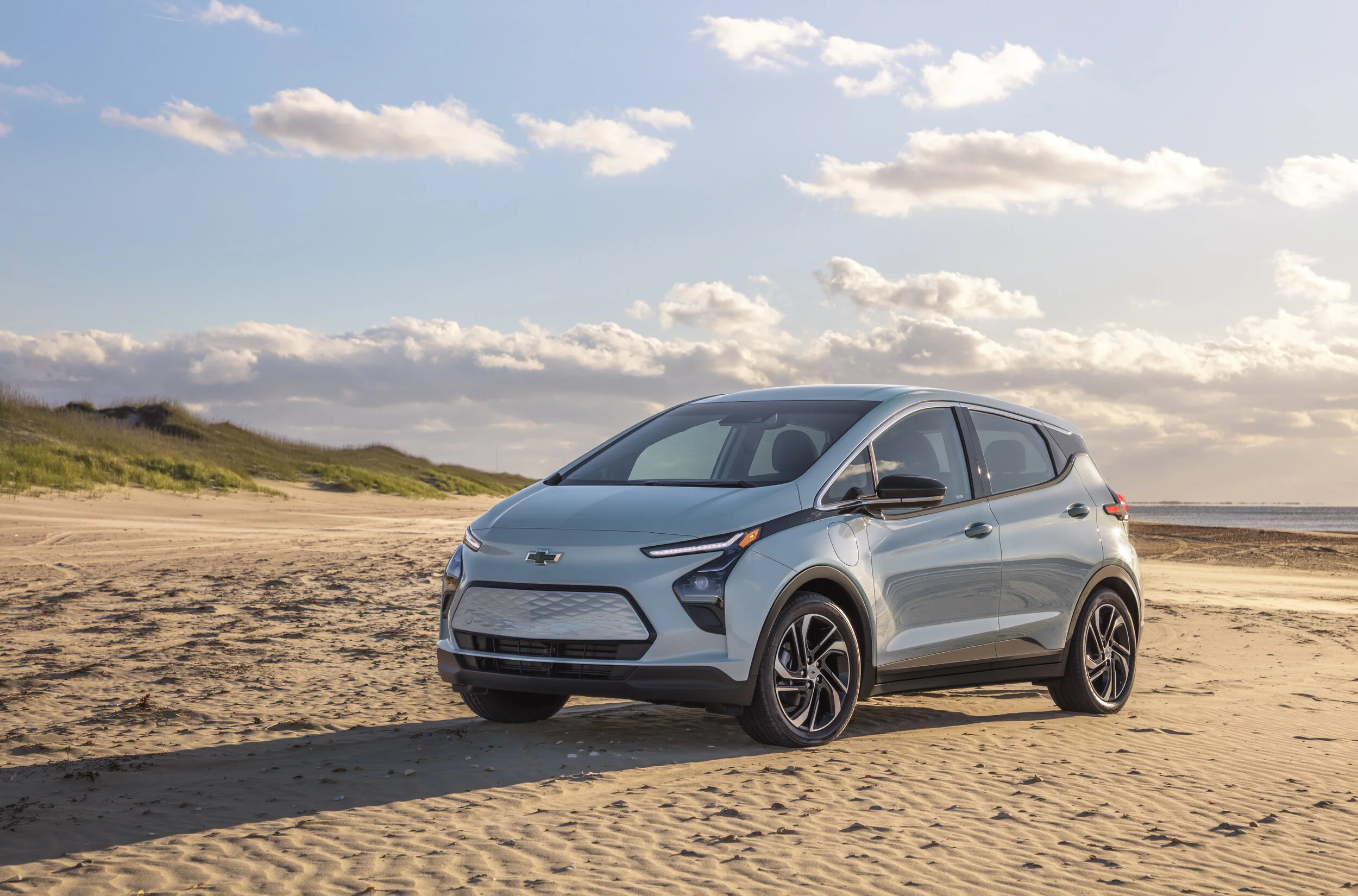
Chevrolet facelifts Bolt EV for 2022 with $31,995 starting price, adds SUV-like Bolt EUV
The Chevrolet Bolt EV has received a considerable visual overhaul, and is now joined by the Bolt EUV compact SUV. While not a lot has changed mechanically, perhaps the biggest headline is the price: US$31,995 for the Bolt EV—some $5,000 less than the outgoing model—and $33,995 for the Bolt EUV.

Chevrolet unveils 2022 Bolt EV and Bolt EUV with new looks, more features
Unchanged 65kWh Li-ion battery pack with active thermal management
Single-motor 150kW (200 hp) drive unit with 360 Nm (266 lb-ft) torque
416km (259 miles) range for Bolt EV, 402km (250 mi) range for Bolt EUV
Bolt EV priced from US$31,995/CAN$38,198, Bolt EUV priced from US$33,995/CAN$40,198
Customer deliveries commence summer 2021 in North America
The Chevrolet Bolt EV has received a considerable visual overhaul, and is now joined by the Bolt EUV compact SUV. While not a lot has changed mechanically, perhaps the biggest headline is the price: US$31,995 for the Bolt EV—some $5,000 less than the outgoing model—and $33,995 for the Bolt EUV. And that’s before state EV grants in the US. GM is no longer eligible for federal EV credits however that may change under a Biden administration. A circa-$30k EV was unthinkable just a few years ago.

The high-riding Chevrolet Bolt EUV. Images: Chevrolet
While nothing has changed mechanically, Chevrolet spins this as featuring a “proven propulsion system”. It’s true though, there’s nothing really wrong under the metal with the Bolt. With 150kW and 360Nm, it performs admirably, and its 350+ kilometre real world range is plenty for many Americans and Canadians. Chevrolet quotes an AC charge rate of 7.2kW out of the box, but the Bolt family can charge up to 11kW with the purchase of additional equipment. Chevrolet doesn’t specify the DC charging speed, instead quoting “100 miles (160km) in 30 minutes”. It’s expected to charge at around the same rate as the outgoing model; a max output of 50-52kW.
Chevrolet will also cover basic home charger installation costs for customers until June, which may assist in attracting first-time EV buyers to the brand.

The 2022 Bolt EV is a stylish blend of cute and futuristic.
The Bolt has received an ironing of its surfaces; taught creases and slim headlights refresh a familiar shape. The Bolt EUV is 15cm longer, which provides considerable additional rear legroom. Based on the same platform as the smaller hatchback, it features totally unique sheetmetal, and should appeal to North American buyers’ preferences for an elevated driving position.

The Bolt EUV features greater luggage capacity, and SUV looks.
On the inside, a new 10.2-inch touchscreen dominates the centre console, and an 8-inch configurable digital instrument cluster. All interior switchgear, controls and seats are new for the 2022 model year.

Dual LCD screens feature prominently in the new Bolt EV and Bolt EUV
The Bolt EV and Bolt EUV also feature Chevrolet’s Super Cruise, dubbed by the company as “the industry’s first true hands-free driver assistance technology for enabled roads”. While Consumer Reports ranked GM’s Super Cruise technology ahead of Tesla’s Autopilot in 2020, this was primarily due to the infrared camera-based driver attention system, that monitors driver behaviour and attention. Consumer Reports stated that Super Cruise was less likely to suddenly disengage without warning the driver, unlike Autopilot which can abruptly shut off.
Of course, Tesla’s advanced Autopilot software uses the company’s neural network, and can work on virtually any road, marked or unmarked, whereas GM’s Super Cruise system is currently limited to roads in Canada and the United States. The Super Cruise system also relies on LiDAR technology, whereas Tesla’s system is camera, radar and ultrasonic sensor based.
While General Motors has committed to an all-electric future, the Bolt EV and Bolt EUV are perhaps the last electric vehicles to not ride on a dedicated EV platform architecture. Despite the engineering and packaging constraints of adapting internal combustion engine platforms for electric vehicle models, we think the Bolt range still provides a compelling option for North American EV buyers, with decent range, features, quality and safety at very attractive price.

The 2022 Chevrolet Bolt EUV

The 2022 Chevrolet Bolt EV

The side profile of the Bolt EUV

The Bolt EUV features greater interior space over the Bolt EV
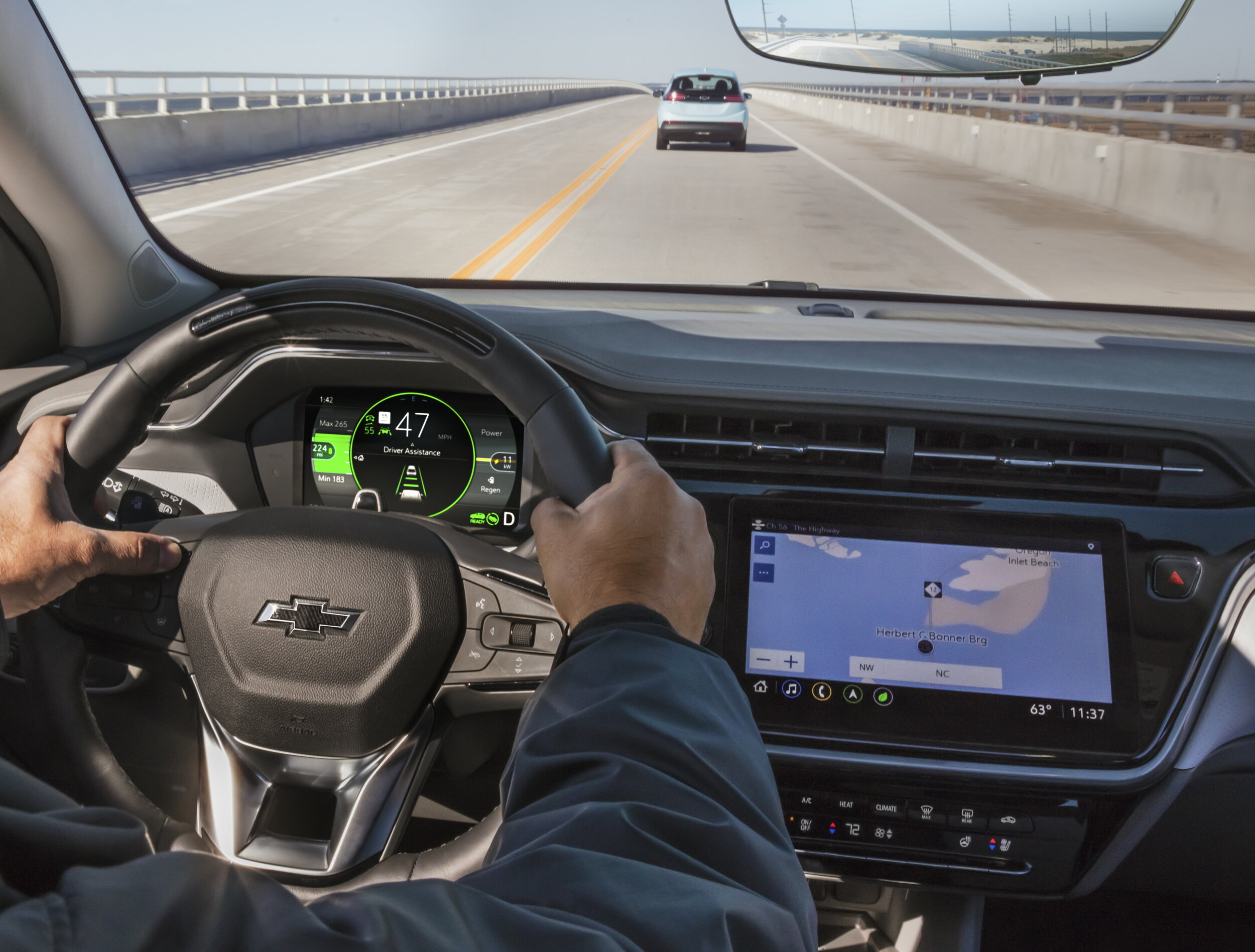
The Interior of the Bolt EUV with Super Cruise activated

Plenty of cargo space in the Bolt EUV trunk thanks to a longer body over the Bolt EV
BYD partners with Nexport to sell electric vehicles in Australia from 2022
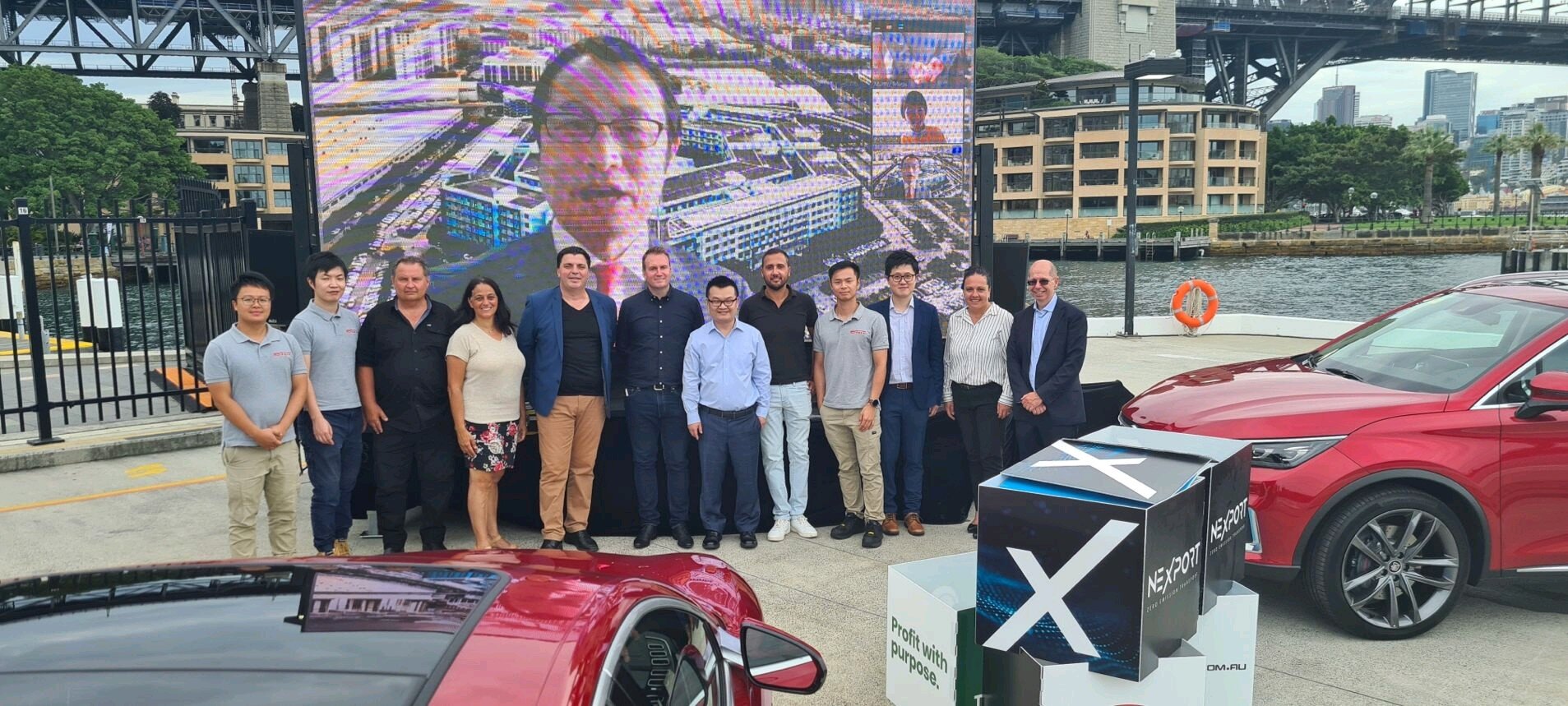
BYD Co Limited (Build Your Dreams) has signed an historic deal with Nexport this week, allowing the Australian company to retail a number of BYD electric passenger vehicles locally from 2022
BYD signs deal to retail electric cars in Australia from 2022
BYD Co Limited (Build Your Dreams) has signed an historic deal with Nexport this week, allowing the Australian company to retail a number of BYD electric passenger vehicles locally from 2022.
This is the first foreign distribution agreement signed by BYD, and will see the launch of a range of the company's electric vehicles to buyers down under next year.
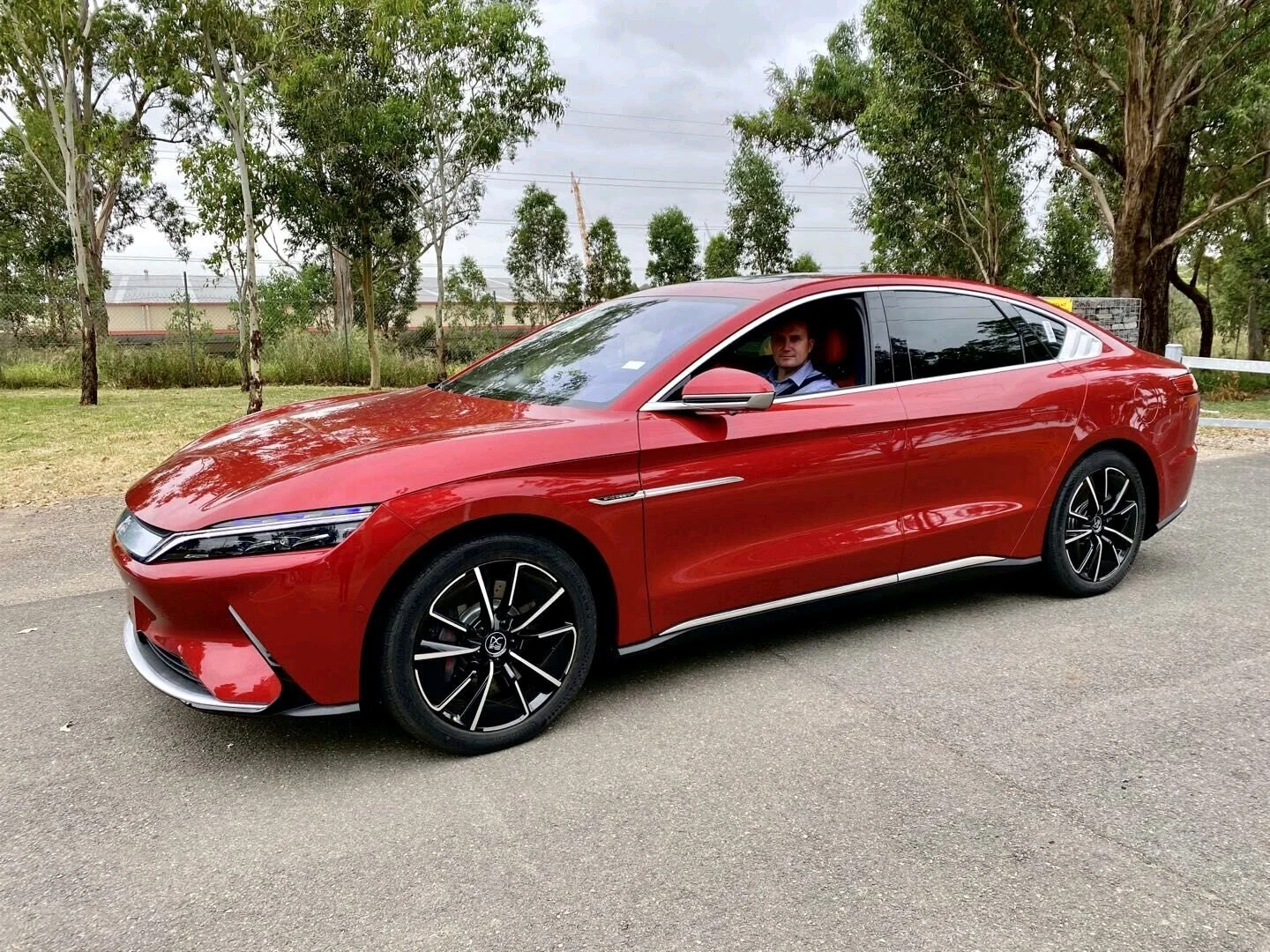
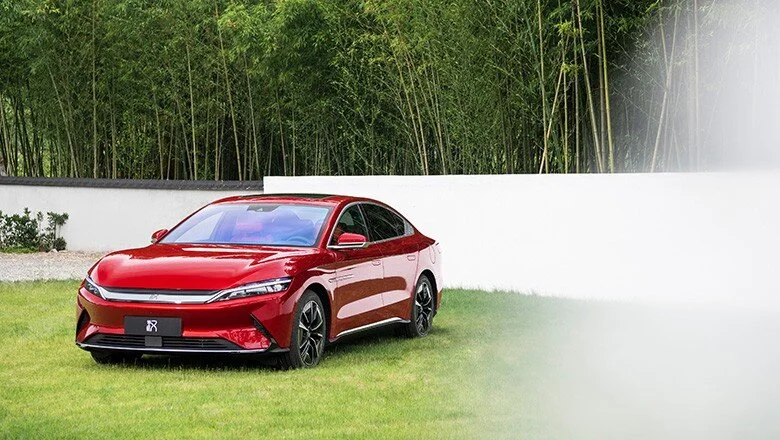
A left hand drive BYD Han in Australia for testing purposes. Image: BYD Australia
“Australian consumers will soon be able to access affordable, best of class electric vehicles in both the passenger and commercial space” according to Luke Todd, Managing Director of Nexport. “Thel right hand markets have been undersupplied in the Electric vehicle space and this agreement ensures certainty of local supply in these best of class EV vehicles”, Todd continued.
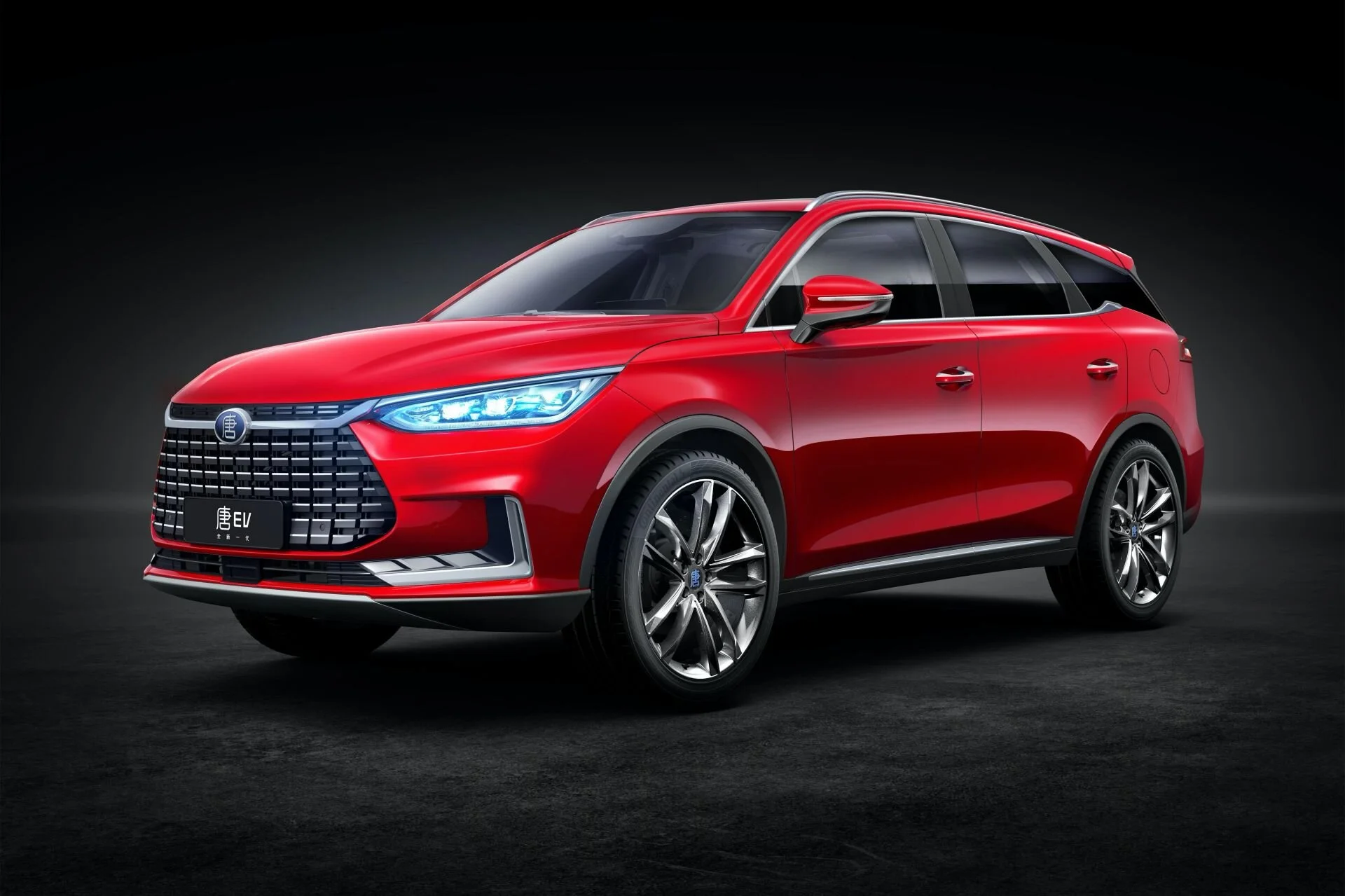
The BYD Tang is an all electric luxury SUV. Image: BYD
Nexport plans to retail BYD electric vehicles through a new online site EV Direct, which is expected to launch customer pre-orders from July 2021. The direct sales model should help to bring the price of EVs down, by avoiding dealership, franchise and transportation overheads, and BYD claims that price parity will be achieved with equivalent internal combustion engined vehicles.

The BYD Han. Image: BYD
It's expected BYD's Tesla-rivalling Han sedan will make it here, as well as the plug-in hybrid crossover Song and Tang SUV.
We are very excited about the prospect of more electric options for consumers in Australia. Any brand snobs should be on notice: a reality check is coming. BYD is the largest electric vehicle manufacturer in China, and before expanding into the automotive sector, the company was the leader in global mobile phone battery manufacturing. There's no doubt that they can make an impact on the Australian automotive market with the right mix of value, luxury and performance.

The BYD Han promises a level of luxury, tech and refinement on par with the best in the business.

Mini Cooper SE electric receives a refresh; lands in Europe March 2021, Australia in Q3 2021
Mini has refreshed the Cooper SE model in its line up, with a fresh face sporting the hexagonal grille and other subtle exterior upgrades in line with its petrol siblings.

MINI refreshes COOPER SE Electric hatch; subtle interior and exterior upgrades are the order of the day
Same 135kW (184hp) motor and 32.6kWh battery
New exterior design, with new Island Blue Metallic paint finish and optional colour gradient roof
Adaptive LED headlights, 17” alloys and Connected Navigation package standard
Driver Assistance Package with Active Cruise Control now an option for the Mini Cooper SE
Mini has refreshed the Cooper SE model in its line up, with a fresh face sporting a hexagonal grille and other subtle exterior upgrades in line with its petrol siblings. The most obvious change perhaps is the distinct lack of yellow highlights everywhere denoting the ‘E’ variant; perhaps customer feedback suggested the Mini Cooper SE would be a more enticing proposition if it looked exactly like the regular Mini hatch?

The Mini Cooper SE has lost its yellow mirrors and ‘E’ bading; you’d have to look hard to see this was the electric variant. Images: BMW AG
A new exterior colour and rooftop colour are available, known as Island Blue metallic and Rooftop Grey respectively. The MINI Electric Collection also includes the painted Multitone Roof. According to BMW, with the aid of a new paintwork technique, the MINI plant in Oxford has created a fascinating colour gradient from San Marino Blue through Pearly Aqua to Jet Black, extending from the windscreen frame to the rear.

Mini’s new gradient roof is impressive for its technique, but won’t be to everyone’s taste.
The electric drivetrain in the Cooper SE has not changed—it’s still sporting the 32.6kWh battery with 200-234km WLTP range, and a respectable power output of 135kW. Mini has created new equipment packages, and added the option of steering wheel heating for the first time.
The Connected Navigation package is now standard, with the Connected Navigation Plus package includes a Head-Up Display, telephony with Wireless Charging, Concierge Service and MINI Connected XL features available as an option.
Mini is offering a new Driver Assistance Package Plus package which includes Active Cruise Control, and now features a Stop & Go function for the first time. This enables the system to slow the MINI Cooper SE down to a standstill if necessary. In our opinion, this kind of active safety equipment should be standard on vehicles these days.
Pricing will be announced closer to the European launch in March 2021, and Australian launch in the second half of 2021.

The only cue at the front that this might be the silent variant

The Mini Cooper SE retains the power socket style wheel design, but with a bit less yellow for 2021.

The Mini Cooper SE retains the cute charm of the R53 Cooper, but with more presence, more vents and more grille

The Union Jack tail lamp design is a nice retro touch

Volta Zero electric truck to make its French debut on customer tour
The Volta Zero, the first purpose-built full-electric large commercial vehicle, will make its French debut at a series of high-profile customer and supplier events, starting in Paris on Monday 15 February and running for four weeks.

VOLTA ZERO MAKES ITS FRENCH DEBUT ahead of customer deliveries in late 2021
The Volta Zero, the first purpose-built full-electric large commercial vehicle, will make its French debut at a series of high-profile customer and supplier events, starting in Paris on Monday 15 February and running for four weeks.
Volta is a European start-up that launched a prototype version of its Zero full-electric 16-tonne in September 2020. The company expects European customer deliveries to begin by the end of 2021. Perfect for inner-city freight deliveries, the Zero has a pure-electric range of 150 - 200 kms (95 – 125 miles), the Volta Zero will eliminate an estimated 180,000 tonnes of CO2 by 2025 according to the company.
For the first time in France, the Volta Zero will be displayed with Swoopin, the global provider of sustainable transportation and urban logistics services, in south east Paris. In early January, Swoopin confirmed the use of the Volta Zero as part of their existing zero-emission fleet of electric vans, cars and eBikes, supporting their last-mile distribution hubs, and helping cities meet ambitious CO2 emissions targets. Over the four-week event, many potential and existing customers, fleet operators and suppliers will experience the Volta Zero, as well as introductions to local legislators and policymakers.

The Volta Zero in Swoopin livery, ready for its French debut. Image: Volta
Under current legislation, internal combustion engine commercial vehicles will be banned from operating in Paris from 2024 as all French cities of more than 150,000 residents adopt new Low Emissions Zones. As part of this legislation, the French government is offering incentives of up to €50,000 for the transition to zero emission commercial vehicles, making the acceleration of fleet electrification of paramount importance to French fleet operators.
Confirming the French debut, Chief Executive Officer of Volta Trucks, Rob Fowler, said; “With the imminent changes in legislation in French cities, it’s clear that the adoption of electric commercial vehicles needs to accelerate very quickly. Currently there is a real shortage of electrified products on offer to fleet operators, but with the Volta Zero, we can show our important French customers that we have a compelling solution that meets their needs.
“When our founders created Volta Trucks, they didn’t want to just offer a zero-emission vehicle, but to accelerate the adoption of electric vehicles as a whole, especially in city centres where air quality is at its worst. In bringing the Volta Zero to France, we also hope to stimulate a wider awareness of full electric vehicles in the commercial sector and thus, help improve the air quality and environment for all French city inhabitants.”

Audi electrifies the sports sedan: meet the 2022 Audi e-tron GT quattro and RS e-tron GT
Audi has officially pulled the covers off the 2022 e-tron GT quattro and Rennsport RS e-tron GT models overnight, and we certainly like what we see. Long, low and wide, the e-tron shares a lot with the show car unveiled in 2018, and also shares a lot under the skin with Porsche’s Taycan EV.

Audi adds vorsprung to its electric range with the 2022 e-tron GT quattro and RS e-tron GT
e-tron GT quattro and RS e-tron GT feature a 93.4kWh battery with 800 volt electrical architecture, and a maximum DC charging rate of 270kW
e-tron GT quattro produces a combined 345 kW (469PS) and 629Nm (464 lb-ft) from its two motors
RS e-tron GT produces a combined 440kW (590PS) and 830Nm (612 lb-ft) from upgraded motors
Three-chamber air suspension and all-wheel steering improve handling and agility
e-tron GT quattro priced from US$99,900 MSRP, RS e-tron GT priced from US$139,900 MSRP
Sales commence in North America from summer 2021
Audi has officially pulled the camouflage off the 2022 e-tron GT quattro and Rennsport RS e-tron GT models overnight, and we certainly like what we see. Long, low and wide, the e-tron shares a lot with the show car unveiled in 2018, and also shares a lot under the skin with Porsche’s Taycan EV. Audi has released US pricing for the e-tron, with the e-tron GT quattro Premium Plus starting from $99,900, the e-tron GT quattro Prestige from $107,100 and the RS e-tron GT from $139,900. For comparison, the Porsche Taycan 4S starts at $103,800 and the Turbo from $150,900.
Exterior Design
Marc Lichte, Head of Audi Design states that “Good design is achieved when a product is aesthetic and functional at the same time”. He goes on to say that ”form follows function, [and] aesthetics arise from efficiency. The new design language creates a stronger flow and thereby creates refined aerodynamics. The design of the e-tron GT thus forms the basis for the design of future electric models.”
Clearly Porsche’s J1 platform architecture has informed the design of the e-tron GT family, but we don't mind one bit. Audi has reinterpreted its singleframe honeycomb grille into a drag coefficient friendly form (0.24Cd in case you’re wondering), and paired it with a long, wide front and squared-off blistered fenders reminiscent of the quattro S2 and RS wagons.
The E-Tron GT's sloping roof is made from five layers of carbon fiber reinforced plastic, and helps to keep the centre of gravity low in the body. It tapers back to an agressive rear end with bold tail light graphics. Large wheels are very much the order of the day with EVs at the moment, and the e-tron comes with 20-inch 5-double-spoke alloys as standard. 21-inch wheels are available as an option.
The e-tron GT shares the Taycan’s 2.9 metre wheelbase, but bests the Taycan on overall length by around 3cm, at 4.98 metres long. Overall height is low, at just 1.41 metres.

The RS e-tron GT promises to excite with its RS handling and performance characteristics.
For us, the e-tron really brings together the best of Audi’s Vorsprung durch Technik design philosophy. While regular A-series Audi’s are perhaps becoming too fussy with slats, fake vents and angles everywhere in a bid to stand out from the crowd, the e-tron GT keeps things simple; the wide arches, rising dynamic line up the side, large functional vents and a scalloped hood hint at muscular performance without putting on a show. It's an evolution of Audis of the past, from the first gen type 42 R8, to the quattro coupe concept and the original RS2 Avant. We particularly like the pale blue used in the press images, which reminds us of the 2008 R8’s Jet Blue hue.

Low and wide, the e-tron GT shares the Porsche Taycan’s J1 architecture.
Interior Design
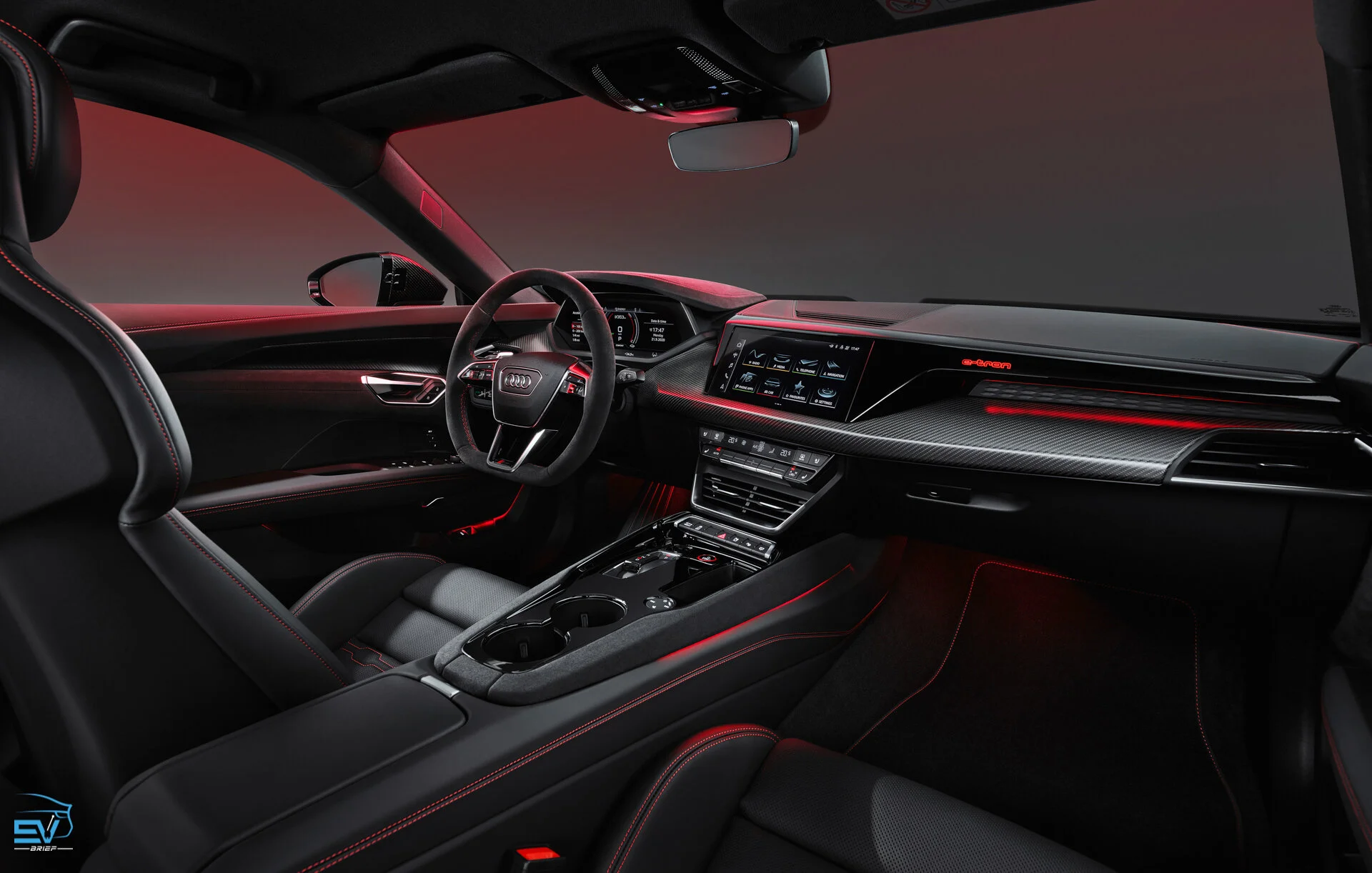
On the inside, current A7 or RS7 drivers would feel right at home in the interior of the e-tron GT quattro or RS e-tron GT. It sports a traditional instrument cluster, and centrally mounted screen with Audi’s familiar MMI-touch interface. Audi claims the e-tron GT interior harks back to the monoposto (single-seat) cockpit design of the R8, with the screen and dashboard angled towards the driver.

The e-tron GT features an animal free interior, and a driver zone familiar to current Audi drivers.
Audi must have listed to customers and the media, because the third touch screen for climate control from the A6, A7 and A8 models has gone, replaced by a conventional set of buttons and knobs. A leather-free interior featuring Dinamica and Alcantara is standard, however Nappa leather is available should hold a strong desire to sit on dead cow.
A large slab of open-pore wood sits atop the dash in the e-tron GT quattro; the RS variant receives carbon fibre inlays. The rest of the interior appears to be classic Audi; functional and stylish, with solid build quality and (hopefully) soft plastics on touch points. Side vision mirrors appear to remain conventional glass rather than the camera and screen setup from the e-tron SUV.

The RS e-tron GT ups the ante with sporty seats, carbon fibre and alcantara with contrasting stitching
Battery and Drivetrain
The e-tron GT quattro and RS e-tron GT both feature two permanent magnet synchronous motors, one each at the front and rear axles and a two-speed transmission at the rear axle:
The Audi e-tron GT quattro has a total output of 350 kW (476 PS) and 630 Nm (464.7 lb-ft) of torque
The RS e-tron GT outputs 440 kW (598 PS) and 830 Nm (612.2 lb-ft) of torque
0–100 km/h (62.1 mph) in 4.1 or 3.3 seconds (RS model), respectively
Top speed of 245 km/h (152.2 mph) with the e-tron GT quattro and 250 km/h (155.3 mph) with the RS model
Intelligent control of coasting and recuperation, brake recuperation of up to 265 kW
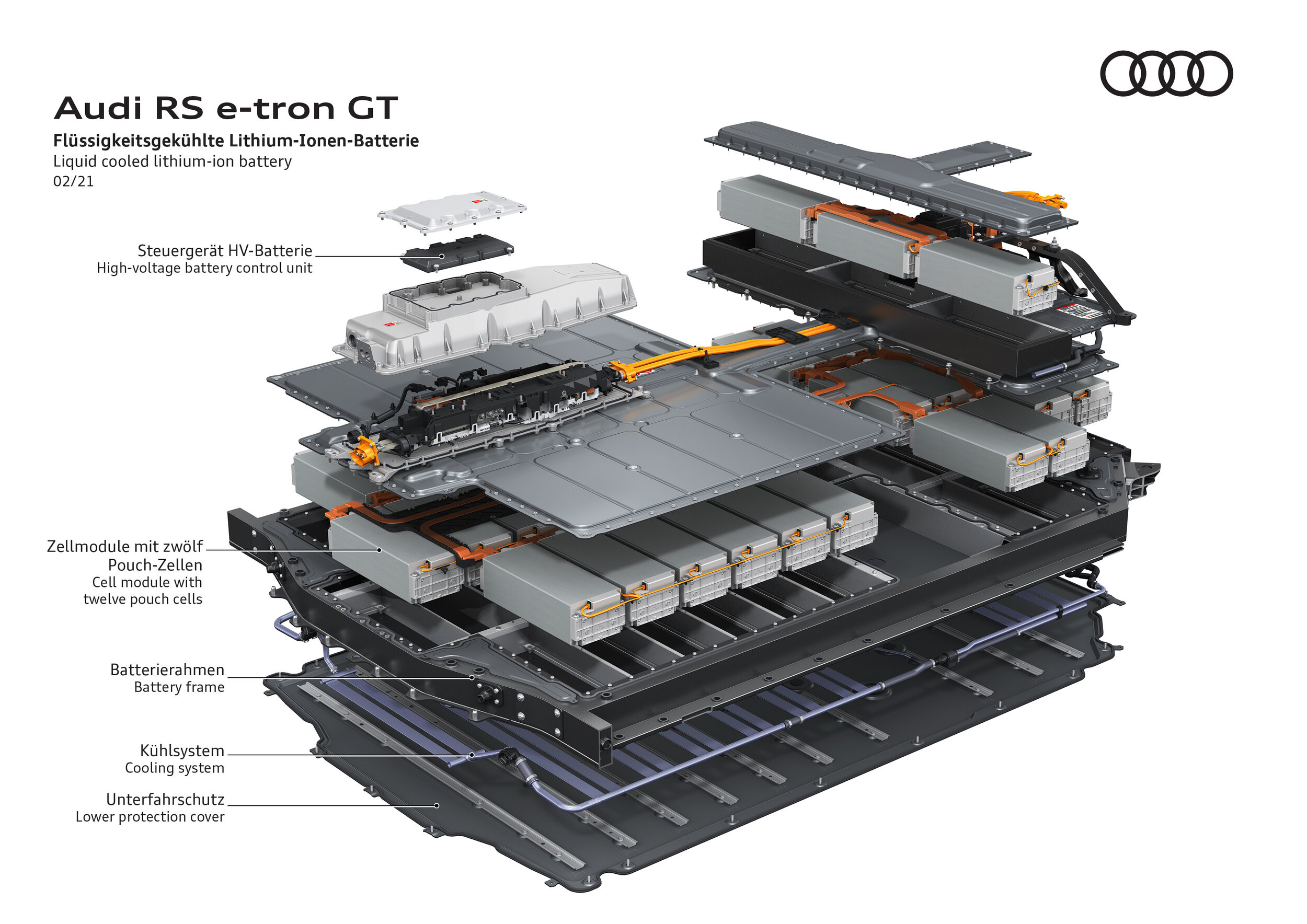
The liquid-cooled Li-ion battery is comprised of 396 pouch cells in 33 modules.
The Lithium-ion battery is shared with porsche’s Taycan, and has a net energy content of 85 kWh (93 kWh gross) and a voltage level of 800 volts comprised of 396 pouch cells in 33 modules. Both models feature AC charging up to 11kW, and DC charging up to 270kW.
Officially the WLTP range of the e-tron GT quattro is 487 kilometres (303 miles) on the WLTP cycle. Audi claims a 100km range boost in five minutes. the e-tron GT features sophisticated thermal management with four cooling circuits and an efficient heat pump as standard, with battery preconditioning for fast DC charging on the road.
The e-tron GT drivetrain features two electric motors and a two speed gearbox
Vehicle Tecnhology
As standard, the e-tron GT quattro features controlled damping with a rear-axle differential lock. The RS model adds a controlled rear axle differential lock with multi plate clutch for greater control over each the traction at each wheel. A three-chamber air suspension system is also standard on the RS. All-wheel steering is optional for both models, providing greater handling and roadholdling through counter steering up to 2.8 degrees.
Audi’s three chamber air suspension (optional on e-tron GT) promises upgraded ride comfort and handling
The brake disks are conventiional steel, with tungsten carbide coating as an option (standard with the RS model. Carbon fiber ceramic discs are optional for both models for those with deep pockets and/or track ambitions.
Audi pre sense safety systems are fitted as standard, while the e-tron GT offers adaptive cruise assist, and (remote) park assist plus. As the owner of a current VAG model, Audi’s adpative cruise in its current generation is a fine safety aid, but is nothing like Tesla’s Autopilot. This is still very much a vehicle one has to drive oneself.
LED front and rear lights are standard, with optional Matrix LED lights available (standard on the RS model). Matrix LED headlights with Audi laser light are available as a range-topping option, providing an additional laser spot/high beam light about 70 km/h.
The Audi e-tron GT quattro and RS e-tron GT models are assembled in the Böllinger Höfe plant at Neckarsulm alongside the Audi R8 supercar. Production of the Audi e-tron GT uses 100% eco-electricity, with a combined heat and power plant fired with biogas providing the necessary heat for the Böllinger Höfe. Emissions that cannot yet be avoided are compensated with carbon credits from certified climate protection projects. This is now the first Audi site in Germany and the third worldwide behind the Brussels and Győr sites to be certified as carbon neutral.

A pre-production e-Tron GT outside the Böllinger Höfe plant at Audi’s Neckarsulm facility
Legacy auto manufacturers still have a lot of catching up to do when it comes to Tesla; ease of charging is a consideration when purchasing a new EV for most people, and in that regard Tesla has the competition trounced. For those who would prefer a bit of German flair with their zero emission status symbol however, the e-tron GT range would be worth your consideration.
North American and European sales are expected to commence in summer 2021, while Audi has stated that Australia can expect to see the e-tron GT range in Australia from Q3 2021.
Scroll down for additional images and video, courtesy Audi AG.




Volvo receives platinum medal in corporate sustainability rating from EcoVadis
Volvo Cars has received the highest rating for its sustainability performance from EcoVadis, a leading provider of corporate sustainability assessments, which has assessed over 75,000 companies in 160 countries.

EcoVadis awards Volvo highest corporate sustainability accreditation placing it in top one per cent of companies
Volvo Cars has received the highest rating for its sustainability performance from EcoVadis, a leading provider of corporate sustainability assessments, which has assessed over 75,000 companies in 160 countries.
According to EcoVadis, Volvo Cars’ sustainability performance deserves an Advanced ranking, based on the agency’s methodology. The resulting Platinum Medal rating places Volvo Cars in the top 1 percent among all 75,000 companies assessed by EcoVadis.
Volvo claims that this accreditation serves as further evidence that sustainability is as important as safety to Volvo Cars and has the highest priority throughout the company’s operations. Volvo Cars is already planning to manufacture all-electric vehicles exclusively in line with tightening emissions regulations from EU member countries.
“Sustainability is as important as safety to us at Volvo Cars,” said Anders Kärrberg, head of global sustainability at Volvo Cars. “We are taking action across the board to ensure we become a more sustainable business, including through reduction of our carbon footprint. It is encouraging that EcoVadis, through its rigid assessment, now confirms that we are on the right track.”
Volvo Cars has a comprehensive climate plan which addresses carbon emissions across all its operations and products, towards its ambition to become a climate-neutral company by 2040.
The plan goes beyond addressing tailpipe emissions through electrification; the company will also tackle carbon emissions in its manufacturing network and wider operations, its supply chain and through recycling and reuse of materials.

The XC40 Recharge is the first of many battery electric vehicles planned for Volvo’s product lineup. Image: Volvo Cars
As a first tangible step towards its 2040 vision, the company aims to reduce its lifecycle carbon footprint per car by 40 percent between 2018 and 2025.
EcoVadis looks at how companies implement sustainability across their supply chain. International companies in a variety of industries, and in particular large fleet buyers, use the ratings published by EcoVadis for their purchasing decisions to move away from unsustainable and unethical suppliers.
In its rating of Volvo Cars, EcoVadis highlighted several of the company’s ongoing sustainability activities and initiatives. It positively mentions its CO2 reduction actions across the supply chain, the verification of its sustainability strategy by the Science Based Targets Initiative (SBTI) and Volvo Cars’ work to improve energy efficiency and the efficient use of material and resources.
Elsewhere, EcoVadis also highlights Volvo Cars’ work to promote diversity and inclusion, its initiatives around protecting labor rights, the company’s extensive ethical business training program and its focus on sustainable procurement around the globe.

UK’s greenest taxi fleet to add five new MG5 EV wagons to its Manchester roster
The MG5 EV estate is an electric vehicle with plenty of space, and an accessible entry price, making it perfect for taxi duties. Premier Taxis was named GreenFleet Private Hire/Taxi Company of the year thanks to its EV initiative after it began operating electric taxis in 2015.

Five MG 5 EV wagons set to join Lancashire taxi fleet
The MG5 EV estate is an electric vehicle with plenty of space, and an accessible entry price, making it perfect for taxi duties. Premier Taxis was named GreenFleet Private Hire/Taxi Company of the year thanks to its EV initiative after it began operating electric taxis in 2015.
The new all-electric MGs replace Toyota Auris Hybrids on the Premier fleet and will be used across the Lancashire firm’s region, as well as airport transfers where the large luggage capacity comes in handy.
Premier Taxis Business Manager, Nikita Cutler, said: “The MG5 EV is great as it has a larger luggage capacity. This will come in handy as these vehicles are viable for airport transfers to Manchester, allowing us to offer customers the opportunity to use a Zero Emission airport transfer service for the first time.
“They will also be really handy for local journeys for those customers who have just been shopping, or for when we are collecting shopping for our most vulnerable customers during the Covid-19 pandemic.”

The MG5 is a spacious, affordable estate priced from £24,495. Image: Auto Express
Premier Taxis is gradually converting its entire fleet to electric-only thanks to huge reductions in running costs as well as positive feedback from its passengers.
“The investment in new electric vehicles is money well spent as operating costs for the company and drivers have reduced while at the same time allowing us to contribute to improving the air quality around Lytham St. Annes, Blackpool and Wyre,” added Nikita. “Electric vehicles also require less day-to-day maintenance, further reducing cost.
“Our customers find them very comfortable, enjoy the smooth and quiet ride and some of them choose only to travel in a 100% Electric vehicle as they understand the difference Zero Emission travel can make to local air quality.”
Premier Taxis driver Steve Foster added: “I have already been managing more than 200 miles (320 kilometres) on a single charge. I plug the car in at home at 5pm and that will last me until the following day at 5pm.
“Our old cars cost £22 to get to Manchester Airport. With the MG it will cost hardly anything to complete the same trip so they make great sense for a taxi driver.”
The MG5 EV is the UK’s first and only all-electric estate (wagon) model, and has a usable luggage capacity of up to 1,456 litres (578 litres with rear seats up). With a 52.5kWh battery, the MG5 has a single-speed front-mounted motor that produces 115kW (154hp) and 260Nm of torque. It has a respectable 0-100kmh (0-62mph) time of 7.7 seconds.
Sadly, SAIC Motor Australia has ruled out the MG5 for the Australian market, and is relying on the MG ZS EV to fly the electric flag for the brand down under. Most likely this is a business decision based on low EV uptake in the Australian market, and a consumer penchant for high-riding SUVs over estates.

Top 5 all-new electric vehicles bound for Australia in 2021
While Australians may have to wait longer for new models than northern hemisphere countries (and longer than our New Zealand neighbours for that matter), the future of all electric passenger cars in Australia is bright. Here are some of our highlights, expected to land in 2021:
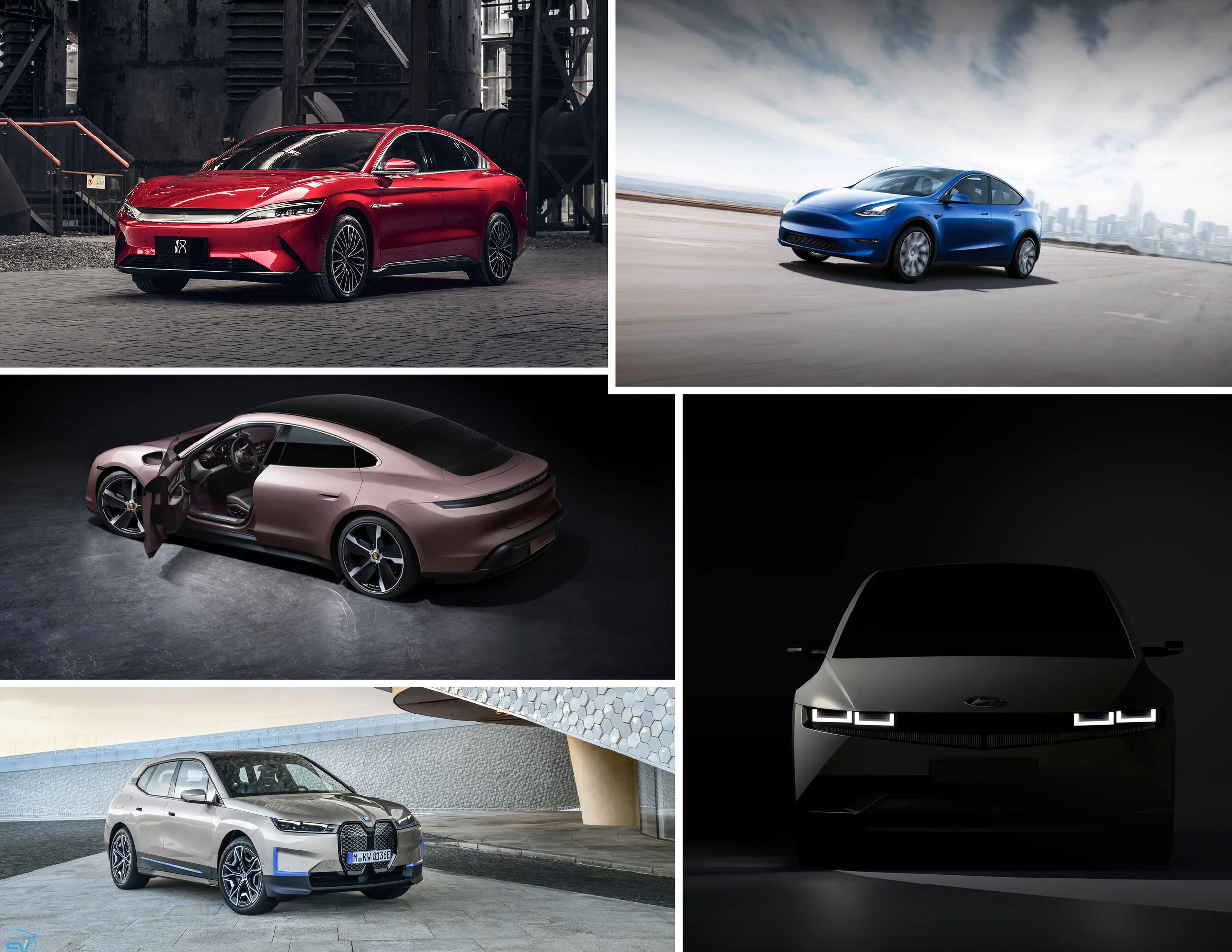
the most exciting all-electric passenger cars launching in Australia this year
Australia’s government has a topsy-turvy list of priorities when it comes to the nation’s shift to renewables and zero emissions vehicles, and while we may have to wait longer for new models than northern hemisphere countries (and longer than our New Zealand neighbours for that matter), the future of all electric passenger cars in Australia is bright. Here are some of our highlights, expected to land in 2021:
Hyundai Ioniq 5
We’re excited about the IONIQ 5 for a number of reasons. Hyundai has proven it can make competent, efficient electric vehicles, and the IONIQ family should continue this trend.
Moreover, IONIQ brings with it a unique design language dubbed ‘parametric pixel’ that is rectangular, futuristic and bold in a sea of familiar compact SUVs. Not just a pretty face, the IONIQ 5 promises an advanced 800 volt architecture, with fast charging up to 350kW, and V2X technology to power almost any device. The IONIQ 5 prototype has already been spotted in Sydney undergoing final testing, so its clear parent company Hyundai sees Australia as an important market for the new brand.

Not a whole lot is known about the IONIQ 5, but Hyundai plans to launch the car down under in 2021. Image: Hyundai Motors
2. Tesla Model Y
Tesla’s Model Y isn’t the new kid on the block anymore, but that doesn’t mean Australians won’t want it. Sporting all the same technology that underpins the Model 3—Australia’s best selling EV— the Model Y features the raised driving position and spacious cabin that makes SUVs so popular in Australia. Available overseas in rear wheel drive Standard Range Plus guise, as well as all wheel drive dual motor Long Range and Performance variants, the Model Y is expected to start from A$80,000-$90,000 for the Standard Range Plus, A$90,000-$100,000 for the Long Range and A$100,000-$110,000 for the Performance variant by the time it lands in Australia. Though there’s nothing offical from Tesla, with the Model Y production line in China now operating, we can expect Tesla’s small SUV to join the local line-up sometime in the seond half of 2021.

Tesla’s Model Y sells well overseas for good reason: it’s efficient, fast and comfortable. Image: Tesla Motors
3. BYD Han
BYD’s Han sedan is exciting for a number of reasons; firstly it’s a svelte, handsome sedan with performance and luxury to match its looks. With a 76.9kWh LFP blade battery and a range of 500+ kilometres, the Han can accelerate to 100 kilometres per hour (62 miles per hour) in 3.9 seconds. It’s got a luxurious interior too, and priced from 279,500 RMB (about AUD$55,500) in China we believe the Han could have a decent slice of the EV market share if priced at or below Tesla’s Model 3 (around AUD$70,000). Importer Nexport currently has one left hand drive Han in Australia, possibly for evaluation/compliance purposes. While no official launch timing has been revealed, Nexport’s direct-to-consumer site evdirect.com.au is planning a big announcement for Wednesday 10 February.

BYD’s Han has the potential to be a great value player in the luxury EV market. Image: BYD
4. Porsche Taycan
EV Performance, refinement and efficiency combined with Zuffenhausen’s legendary interior and exterior design? What’s not to love? Well, the eye-watering price for starters. Forget for a moment that the Taycan Turbo S Starts from $366,133; less expensive variants will eventually make their way down under. It’s significant that one of the world’s most revered sports car manufacturers should design and develop an all electric vehicle, and from overseas reports, the Taycan hasn’t lost Porsche’s handling and performance DNA. Real world range of the standard 79.3kWh battery is also greater than the official figure of 326 kilometres as we reported here. Deliveries are expected to commence in February 2021.
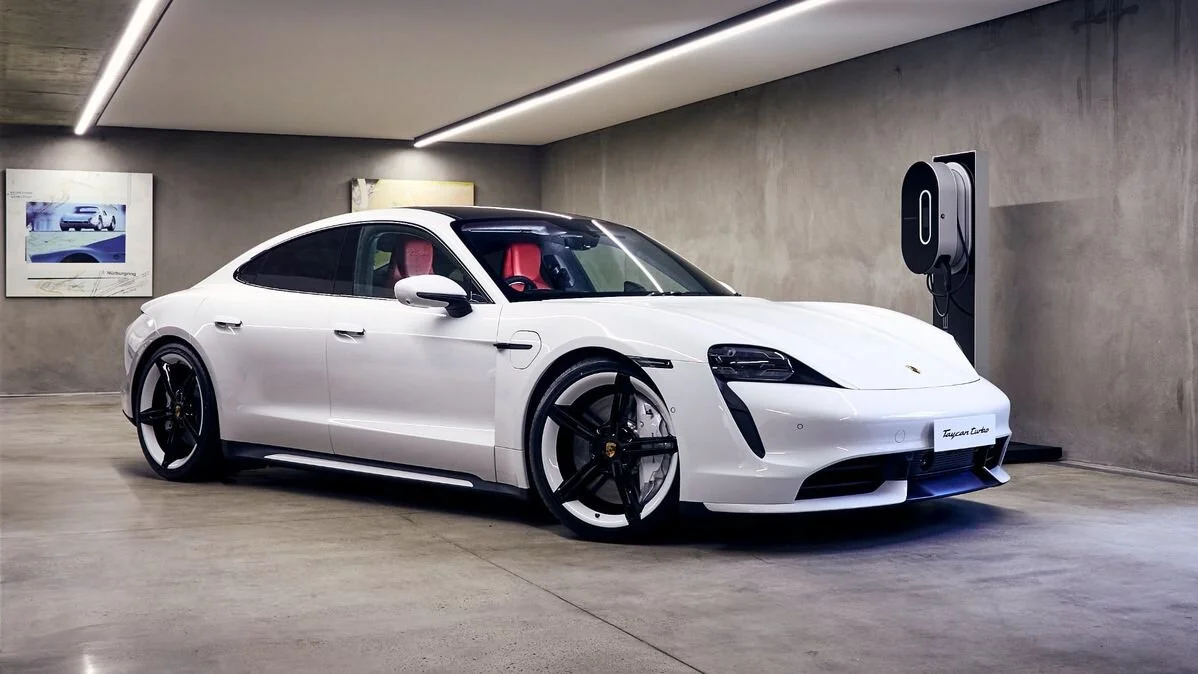
Australian Porsche fans can expect deliveries of the Taycan to commence in February/March 2021. Image: Porsche Cars Australia
5. BMW iX
Yes it’s another SUV on the list, but isn’t that what the market wants? Looks are subjective, but one can’t argue with the imposing face of the iX. While a big, hulking electric SUV may not be our cup of tea, it makes the list because in inner-city parts of Australia where the BMW X5, Porsche Cayenne and Mercedes-Benz GLE are king. Electrifying these vehicles will have a significant impact on emissions and perceptions around electric vehicles. While Mercedes-Benz’ EQS has been on the scene for over a year now, BMW’s iX rides on a new-from-the-ground-up advanced aluminium space frame/CRFP composite chassis designed specifically for EVs. BMW claims a WLTP range of “over 600 kilometres” and an engine output of “over 370kW”, and the iX should arrive in Australia before the end of 2021.

The BMW iX is big, aggressive and all electric. Image: BMW AG
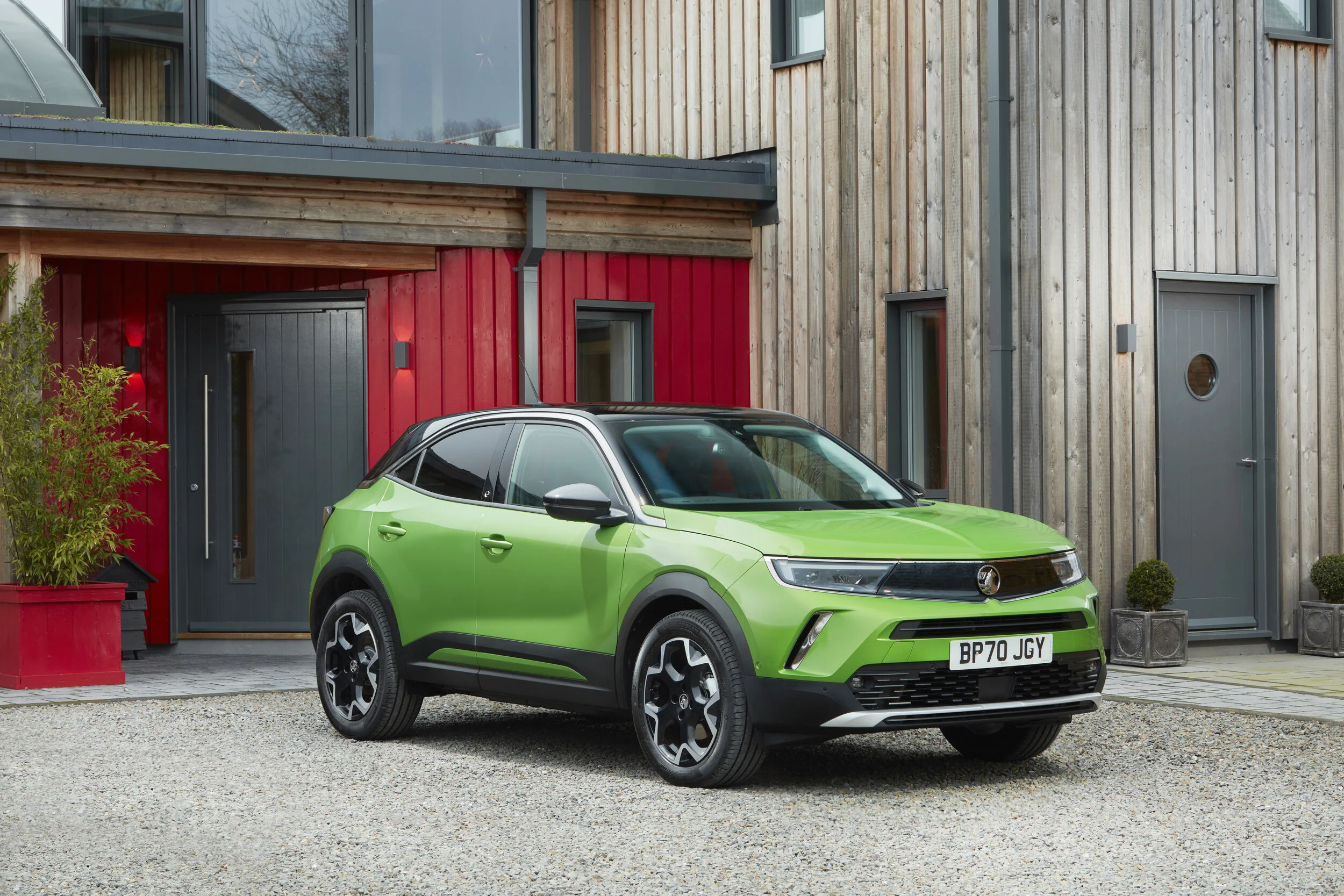
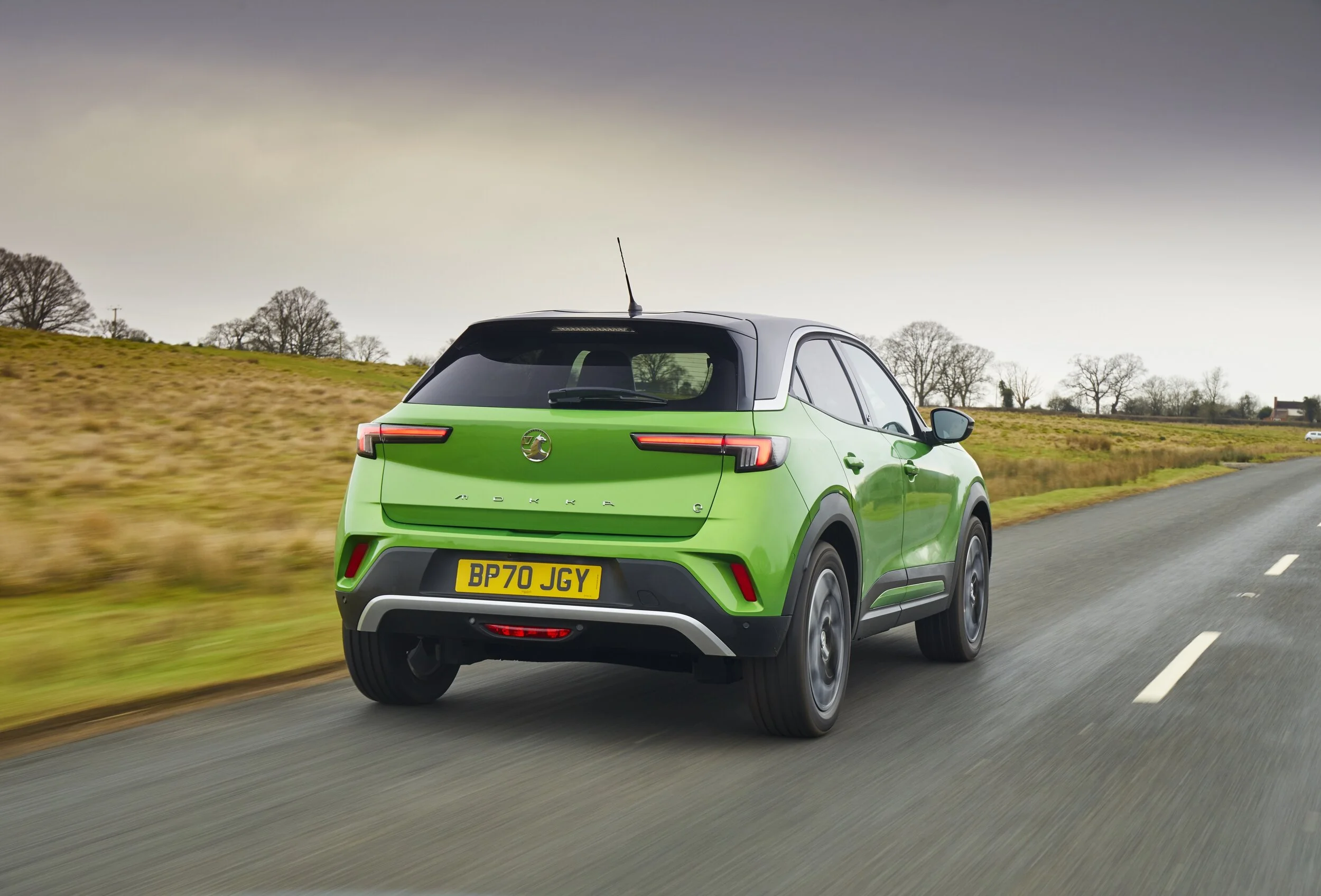
Vauxhall Mokka-e SUV available to order now from £30,840 OTR* in the UK
Vauxhall’s new Mokka-e is available to order in the UK, and starts from £30,840 OTR after Plug-in Car Grant.
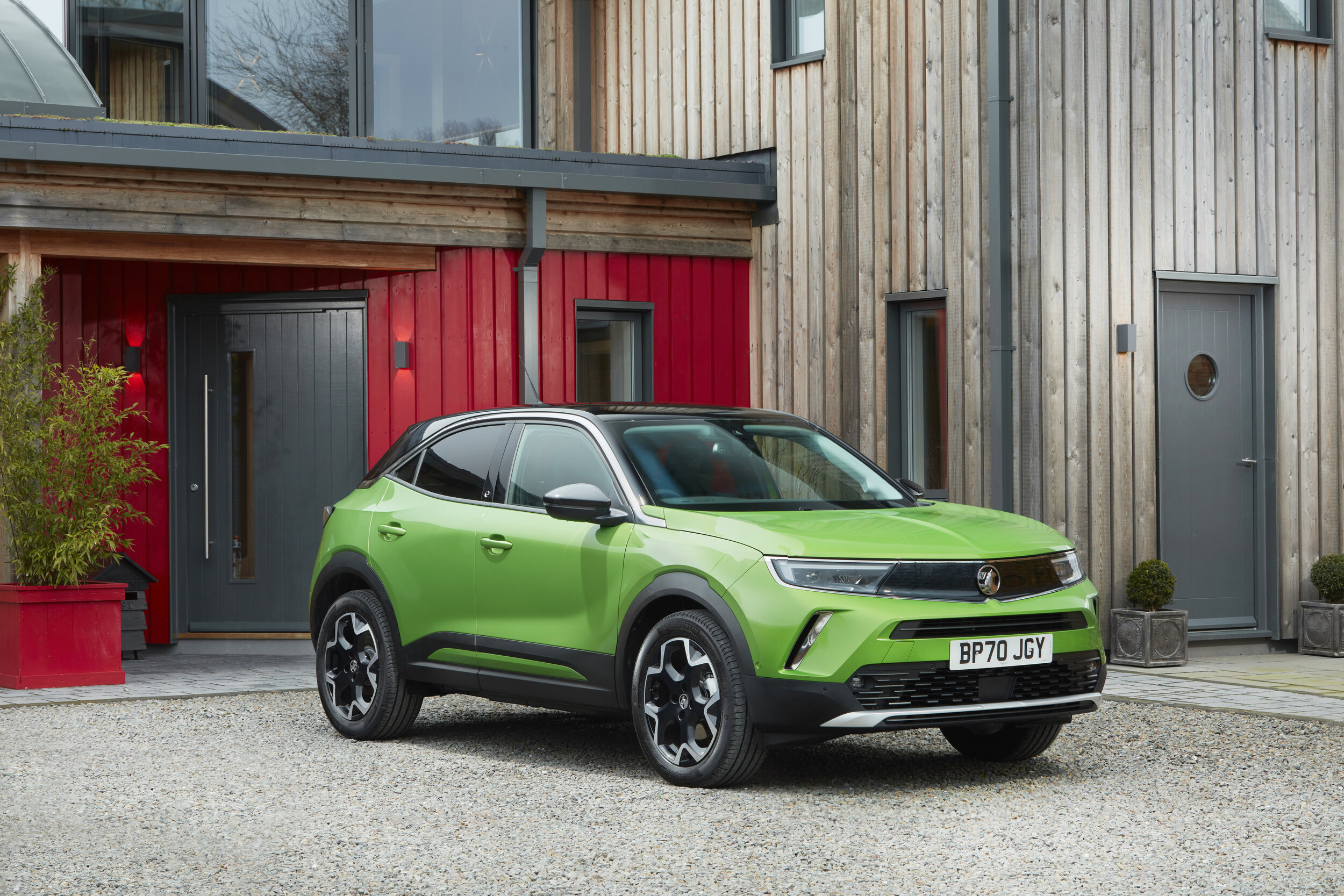
Mokka-e headlines vauxhall’s new compact suv range
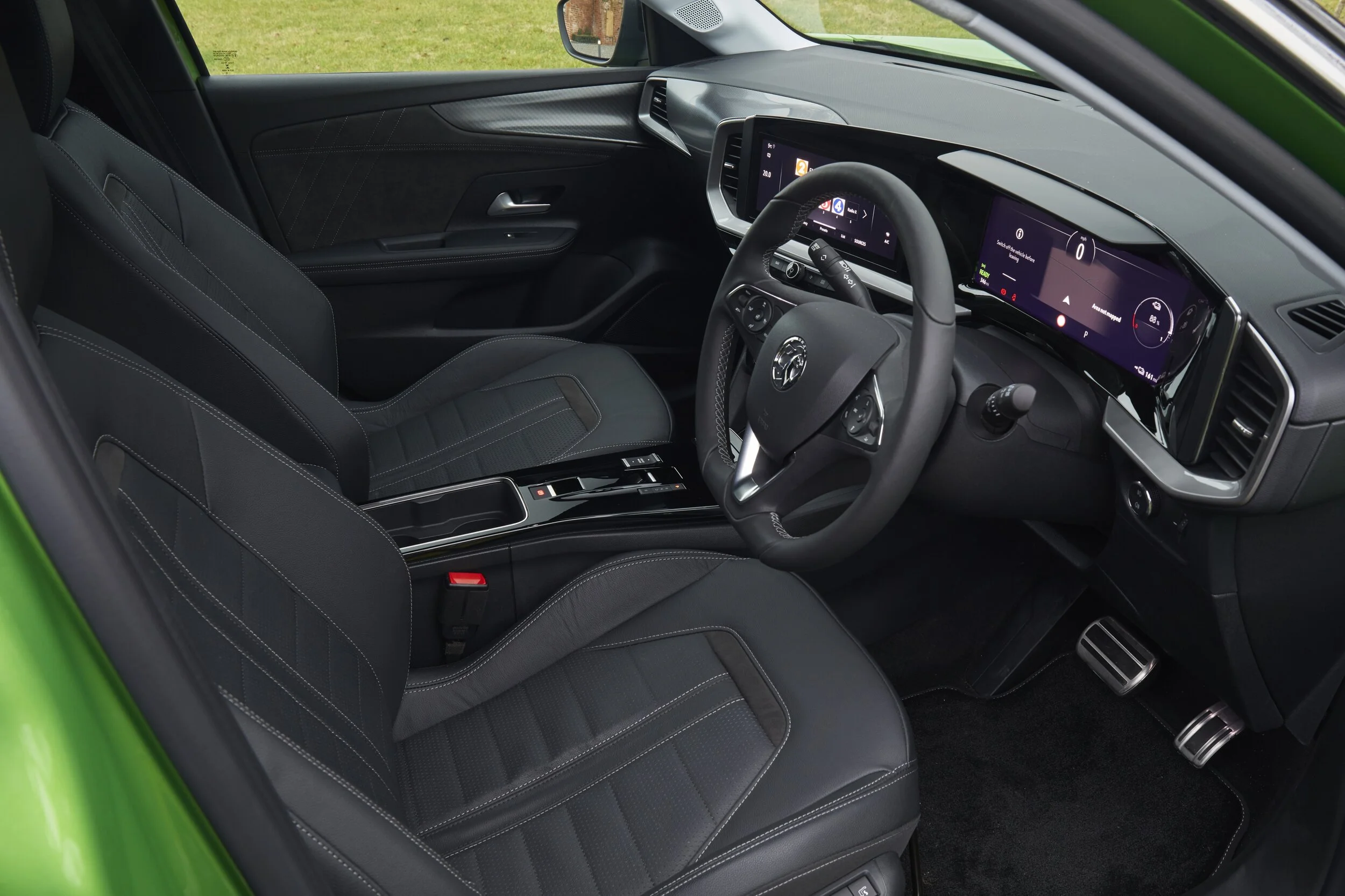
Vauxhall’s new Mokka-e is available to order in the UK, and starts from £30,840 OTR after Plug-in Car Grant. The fully electric variant features a 50kWh battery and 100kW (136PS) electric motor to produce 260Nm of torque. The new Mokka-e can drive for up to 201-miles on a single charge (WLTP) and supports up to 100kW rapid charging, with an 80% charge taking around 30 minutes.

The Vauxhall Mokka-e starts from £30,840 in the UK
Built on Vauxhall’s multi-energy Common Modular Platform (CMP) shared with Peugeot’s e-2008, the new Mokka measures 4,151mm long, 1,791mm wide (excluding the mirrors), and 1,531mm tall. Compared to the previous model, the new Mokka is 124mm shorter, and 10mm wider, while the wheelbase has been increased by 2mm. The shorter profile and flowing body surfaces give the new Mokka a sporty and dynamic stance.
Customers can choose between three driving modes, Normal, Eco and Sport to suit their driving requirements and energy consumption. Each mode not only alters the throttle and steering response, but also adjusts the power and torque available.
Eco: Power and torque limited to 60kW and 180Nm – maximises vehicle range
Normal: Power and torque limited to 80kW and 220Nm – ideal for daily driving
Sport: Full power and torque (100kW and 260Nm) – maximises performance
The Mokka-e comes standard with Automatic Emergency City Braking, LED headlights, speed sign detection, adaptive cruise control, Apple Carplay/Android Auto, DAB digital radio and more. The Mokka-e is available to order online, with the first vehicles scheduled to arrive at dealers by the end of March.




Volkswagen's electric ID.6 SUV revealed in documents filed with Chinese government
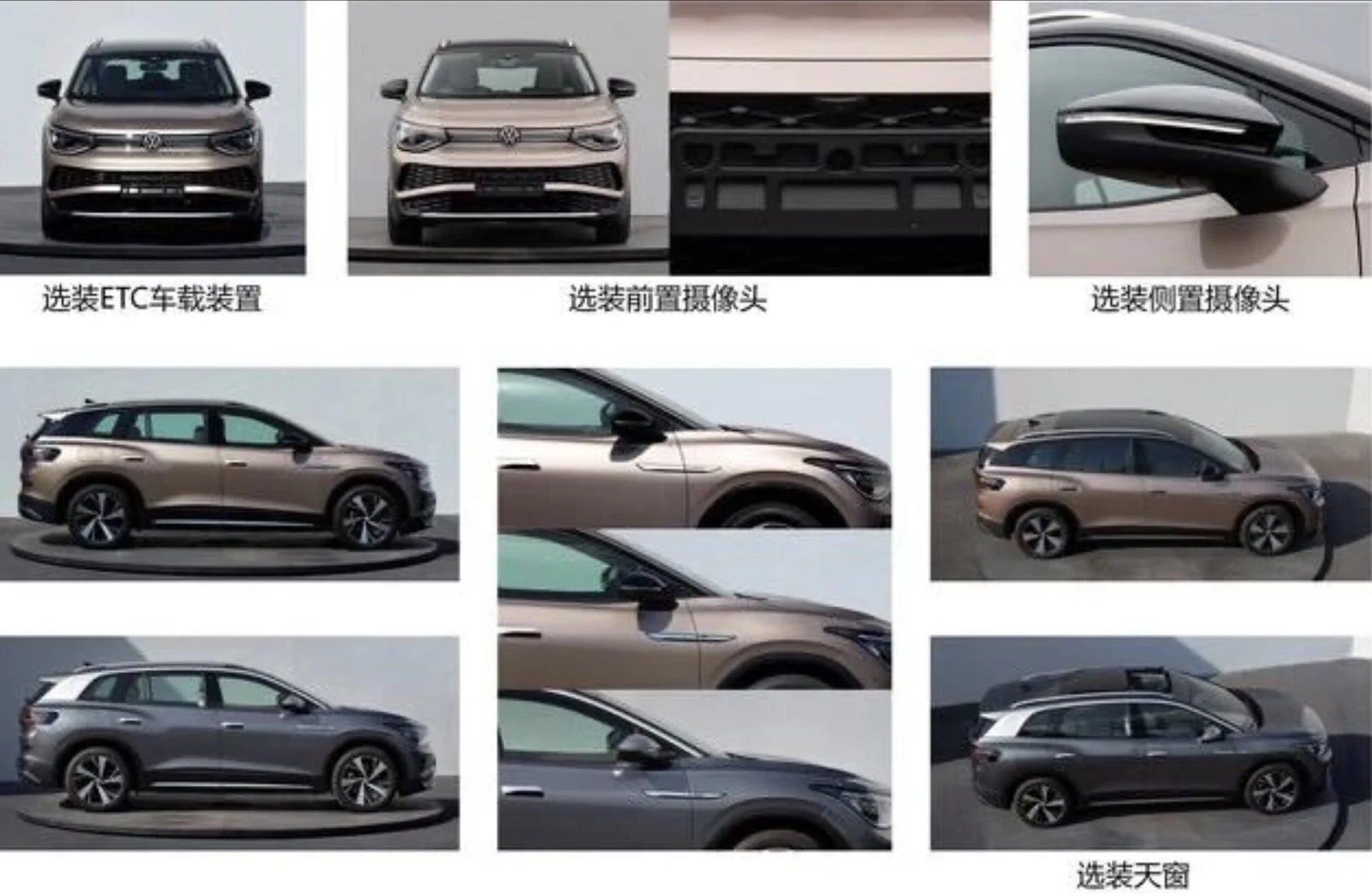
Leaked images of Volkswagen’s new ID.6 full-size electric SUV have appeared online thanks to regulatory filings with the Chinese government.

VOLKSWAGEN TO DEBUT chinese built full-size id.6 SUV
Leaked images of Volkswagen’s new ID.6 full-size electric SUV have appeared online thanks to regulatory filings with the Chinese government. Based on the 2019 I.D. Roomzz concept premiered at the Shanghai Auto Show, The ID.6 is expected to have an 82kWh battery with 150KW charging and 450km range (WLTP) Power in the concept car was rated at 225 kilowatts (302 horsepower) from a pair of electric motors, and Volkswagen estimated acceleration to 100 kilometres per hour (62 miles per hour) in 6.6 seconds.
The VW ID.6 is the third vehicle to be based on the company’s MEB platform architecture, and share’s many design cues with the ID.3 and ID.4. At this stage it appears that it will be produced exclusively for the domestic Chinese market. While one might expect countries such as the USA, Australia and South Africa to be a perfect fit for the ID.6, it’s likely that Volkswagen is using the upcoming ID.4 to test the waters of the electric SUV market.
The ID.6 will likely debut at Auto Shanghai on April 21 2021.
Source: Autocar

The VW ID.6 is based on the 2019 I.D. Roomzz concept, and at this stage is China-only. Source: Volkswagen AG

The VW ID.6 has evolved into a more conservative form, with fewer sweeping curves and trick details from the concept car.

A broad, imposing rear profile, the VW ID.6 is a large SUV that Volkswagen is no doubt considering for the US market.



Polestar and Deepal expand Australian operations as they seek growth in the local market